Let me tell you...A Beautiful Story
Fostering belonging through storytelling
- Client:
- Team:
-
Disciplines:
Storytelling, Interaction Design, Experience Design
-
Schoolyear:
2025-2026
Forced displacement disrupts identity, rituals and social bonds. In the Netherlands, thousands of refugees try to rebuild their lives while carrying an invisible loss of home and belonging. This project explores how gentle, shared storytelling can support a sense of belonging within a safe environment, without focusing on trauma or extraction.
Forced displacement is an increasing phenomenon affecting millions globally. Yet, its weight comes in different shapes and contexts. In the Netherlands, thousands of refugees arrive seeking safety while carrying an invisible loss: of home, identity, community and belonging as they once knew. At A Beautiful Mess, a restaurant project of the Refugee Company that supports over 50 refugees gaining working skills, this reality is part of every shift and shared meal.
In this context, home shifts from a physical place to an emotional and multisensory experience, and belonging tends to emerge through small, everyday moments rather than formal integration efforts.
Let me tell you... A Beautiful Story is a gentle, gamified storytelling experience designed for the team at A Beautiful Mess. This intervention answers the challenge of fostering belonging in a sensitive context by creating space for connection through storytelling.
Through three interconnected layers, we invite people to share stories, memories, rituals and everyday experiences through a game, connect with each other’s stories through relatability, and be part of an ever-evolving collective visual archive to leave their legacy and inspire others.
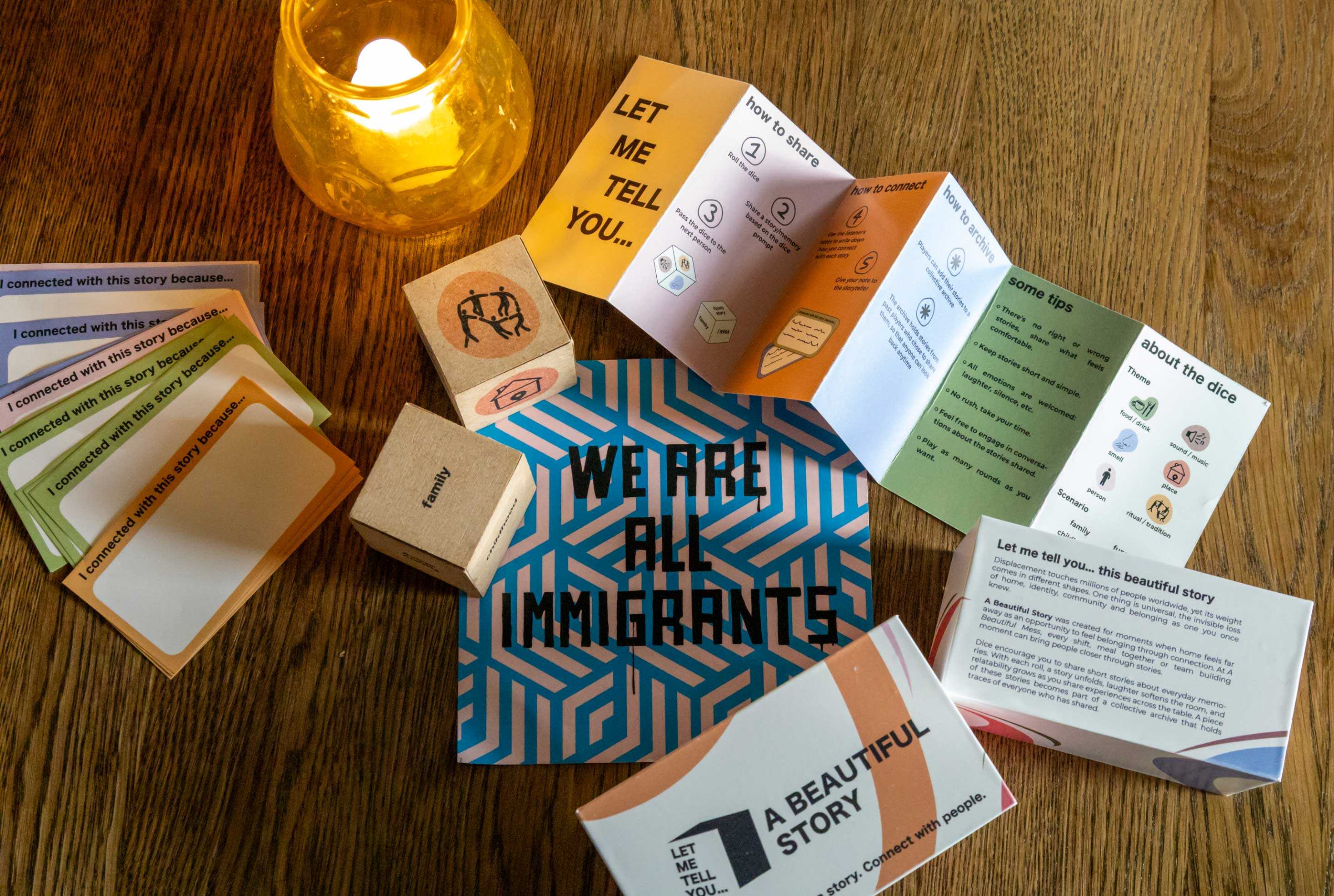
Layer 1: Sharing stories through a game
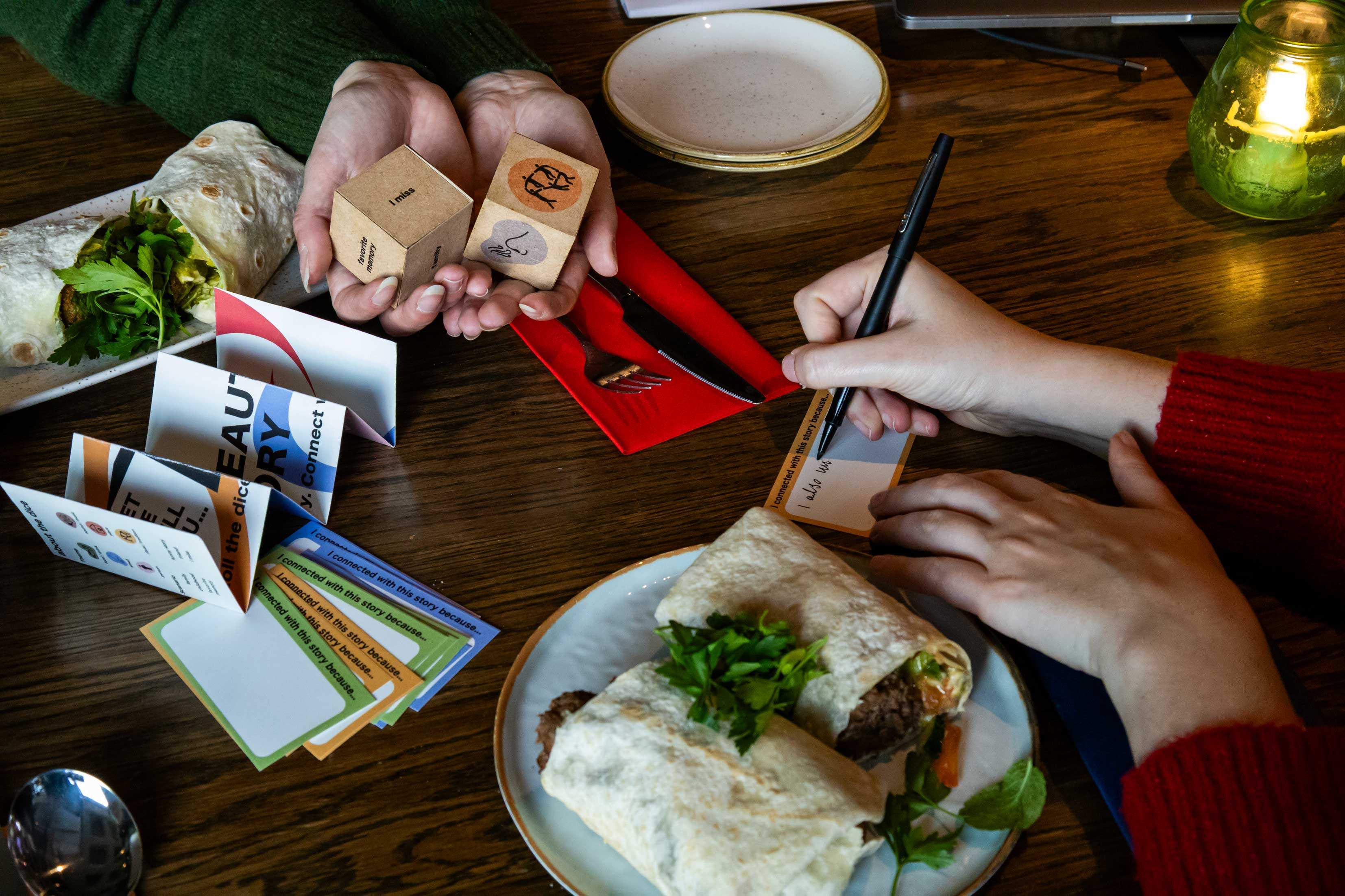
The first layer uses two physical dice with simple, multisensorial prompts. Rolling the dice invites participants to share a story, such as a taste they miss, a ritual that involves smell or a person that made them laugh. This playful structure lowers the threshold for participation and gives people agency over what they choose to share.
Layer 2: Connecting with people through listening
The second layer focuses on connection through familiarity. During testing, it became clear that the strongest connections came from relating to each other stories. This led to the introduction of two roles: storyteller and listener. Listeners engage by writing short “listener notes” that reflect what resonated with them. This mechanism encourages active listening and allows connection to form without pressure to speak.
Layer 3: Connecting with people through listening
The third layer explores collective belonging through an evolving archive of stories. Inspired by existing collective displays at A Beautiful Mess, stories can be voluntarily added to a shared visual archive. This archive acts as a trace of the people who came before and offers newcomers a sense of recognition and continuity. Based on ethical concerns raised during testing, this layer shifted from passive recording using AI to optional self-submission, prioritising privacy, ownership, and trust.
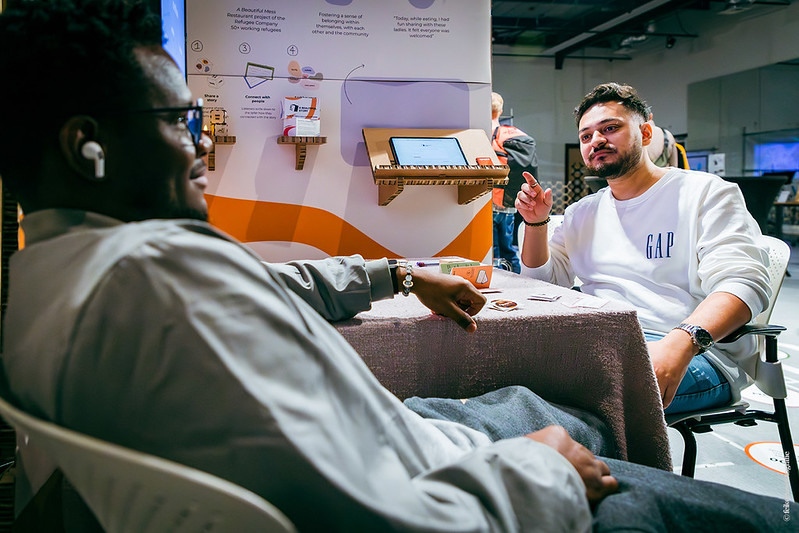
Throughout the process, ethical considerations played a central role. Early iterations revealed risks around retraumatisation, digital abstraction, and lack of participation and agency. These insights shaped key design decisions, such as embedding the experience in existing rituals like shared meals, keeping participation optional, making the experience more engaging through gamification, and avoiding trauma-focused storytelling.
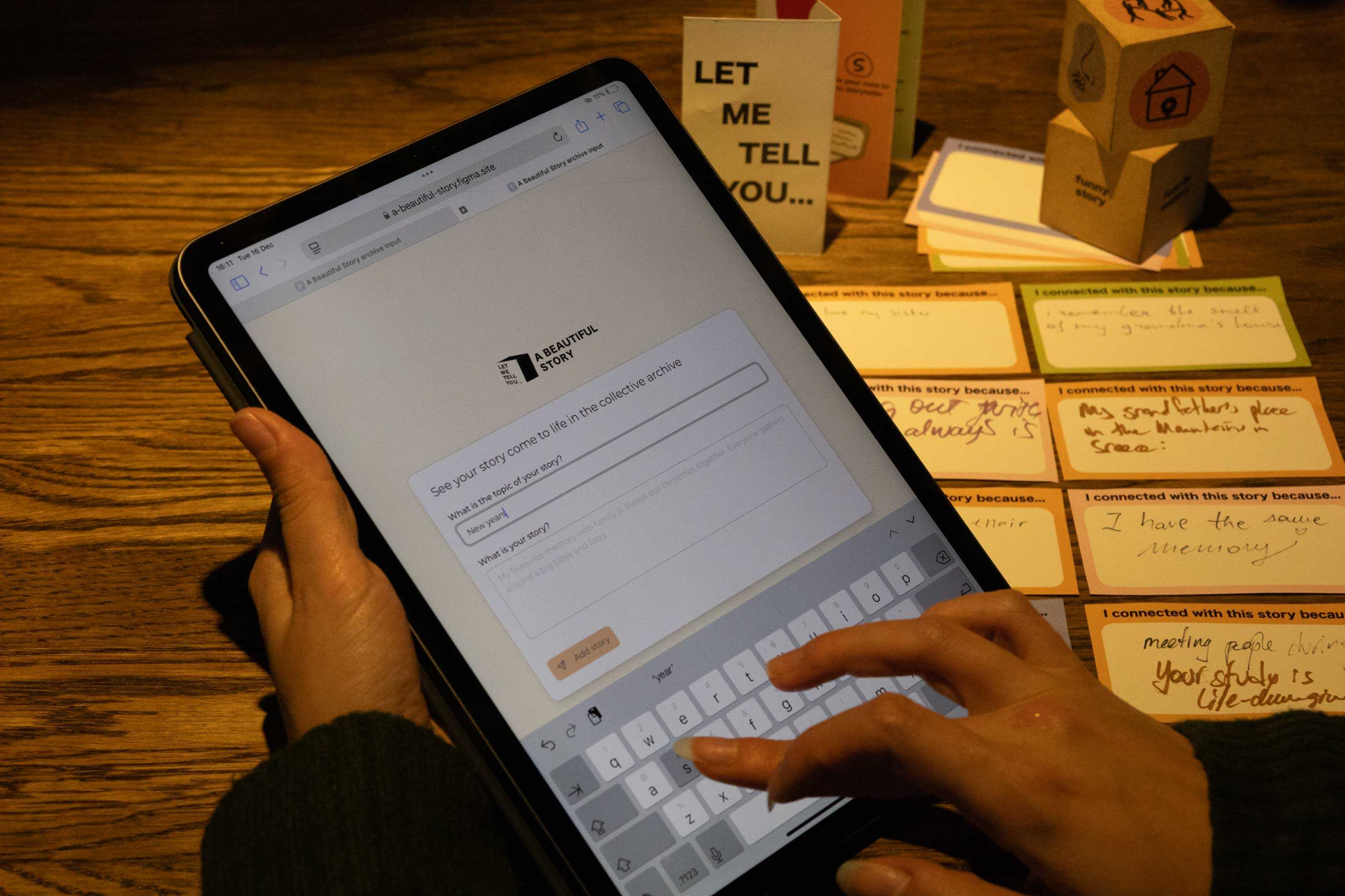
User testing showed that simple prompts, collective play, and everyday memories can create moments of recognition and intimacy. Rather than producing belonging, our role as designers and this experience is to facilitate the conditions in which connection can naturally emerge within an already safe and supportive environment.
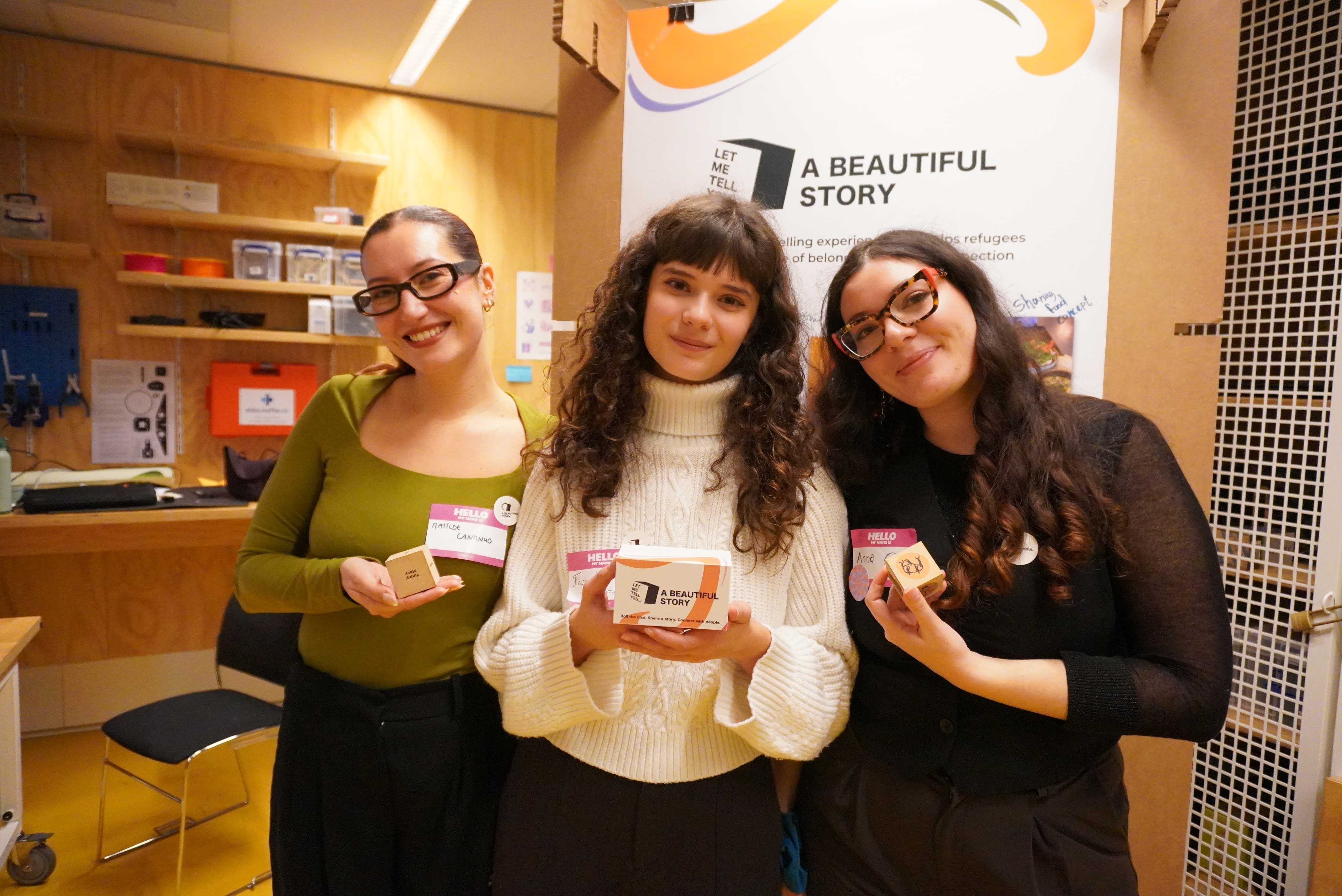
The project suggests that low-threshold, collective storytelling can meaningfully support a sense of belonging in contexts of forced displacement. Future iterations could explore fully physical alternatives to the digital archive and test the experience in other community-based settings where trust and shared rituals already exist. Beyond the context of displacement we focused on, we observed how this experience can create moments of intimacy between people that are valued by users, which indicates a commercial potential as well.