The Ceremony
When self-diagnosis becomes state control. Is this our future?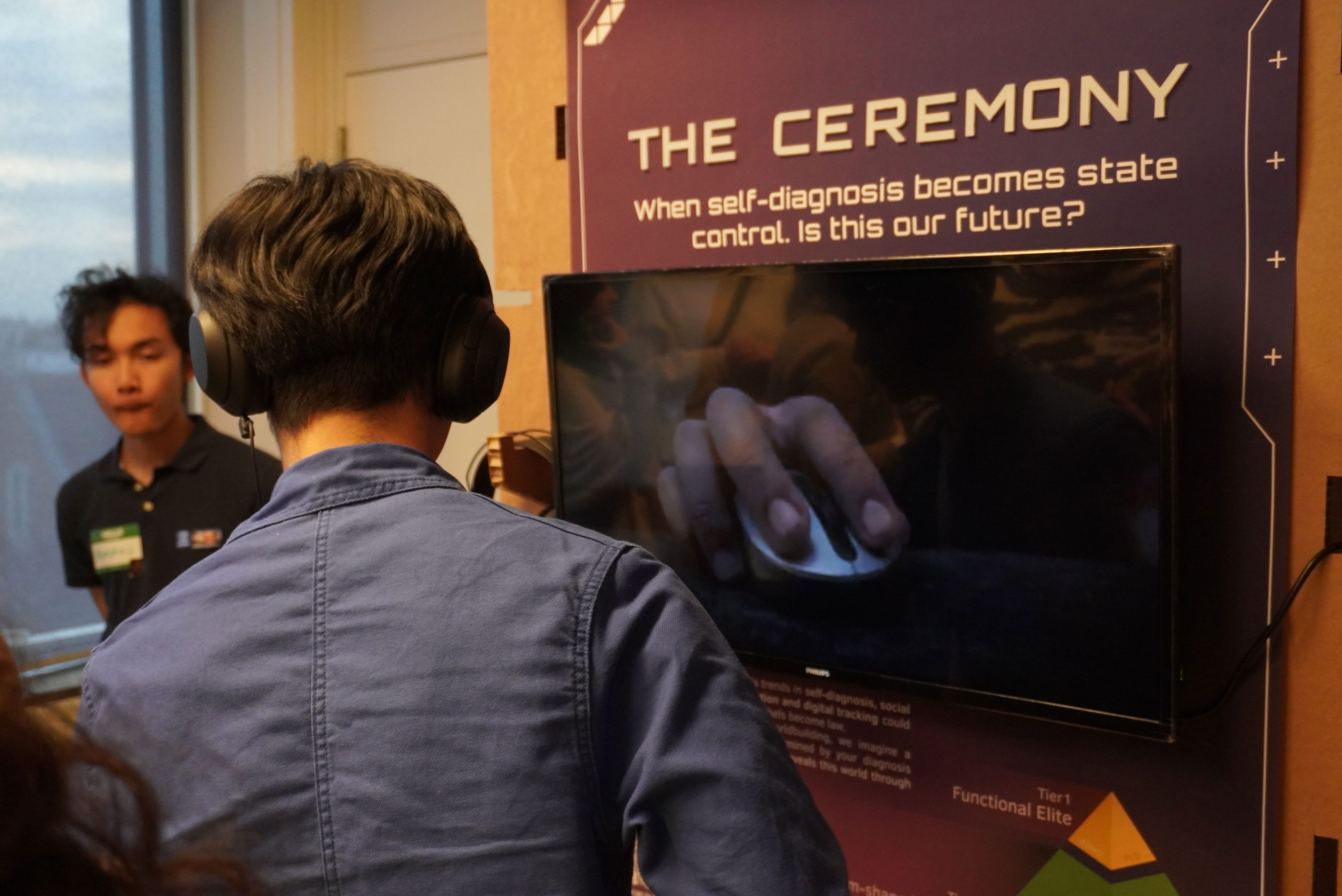
- Client:
- Team:
-
Disciplines:
Speculative Design, Storytelling, Experience Design
-
Schoolyear:
2025-2026
The Ceremony is a speculative design project that investigates how digital platforms, algorithms, and social media shape adolescent identity. By exaggerating current trends in online self-diagnosis, the project aims to reveal the hidden systems of algorithmic control and prompts reflection on how digital labels influence our relationships and self-worth.
Social platforms like TikTok have become primary sources of mental health information for teenagers, often leading to a trend of self-diagnosis through user-generated content and checklists. This environment is fuelled by the Barnum Effect, where individuals recognise themselves in vague, general symptoms, and Echo Chambers that reinforce distorted self-perceptions. Algorithms have a massive influence on our self-perception. They curate a world that validates our self-diagnoses, eventually making a trend feel more credible than a doctor’s opinion.
The Design Process
The Ceremony is set in the year 2104 and it imagines a dystopian future where a mandatory mental health diagnosis at age 18 determines a citizen's social status, life opportunities, and tier placement.
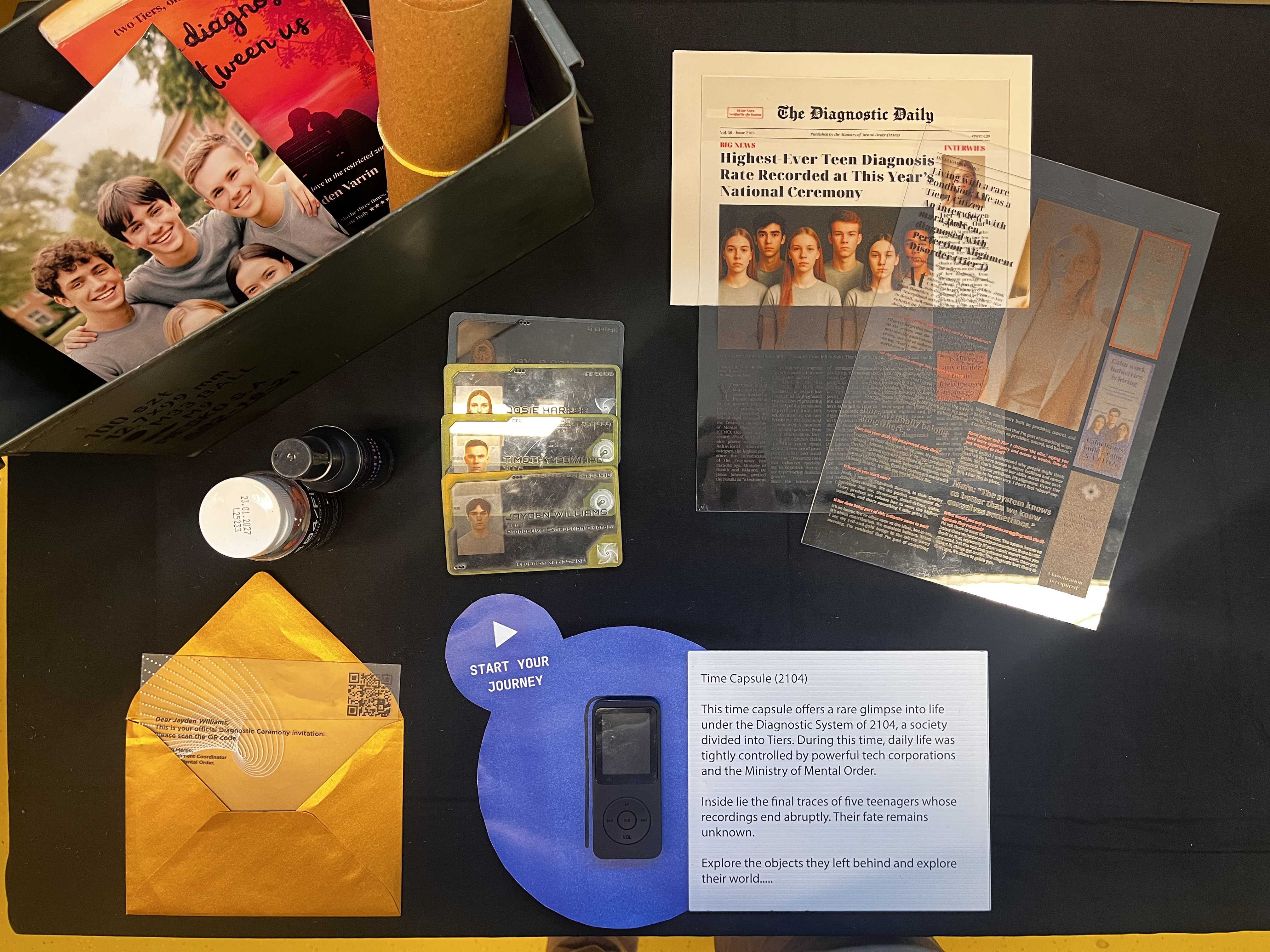
The project consists of an immersive exhibition featuring three main elements:
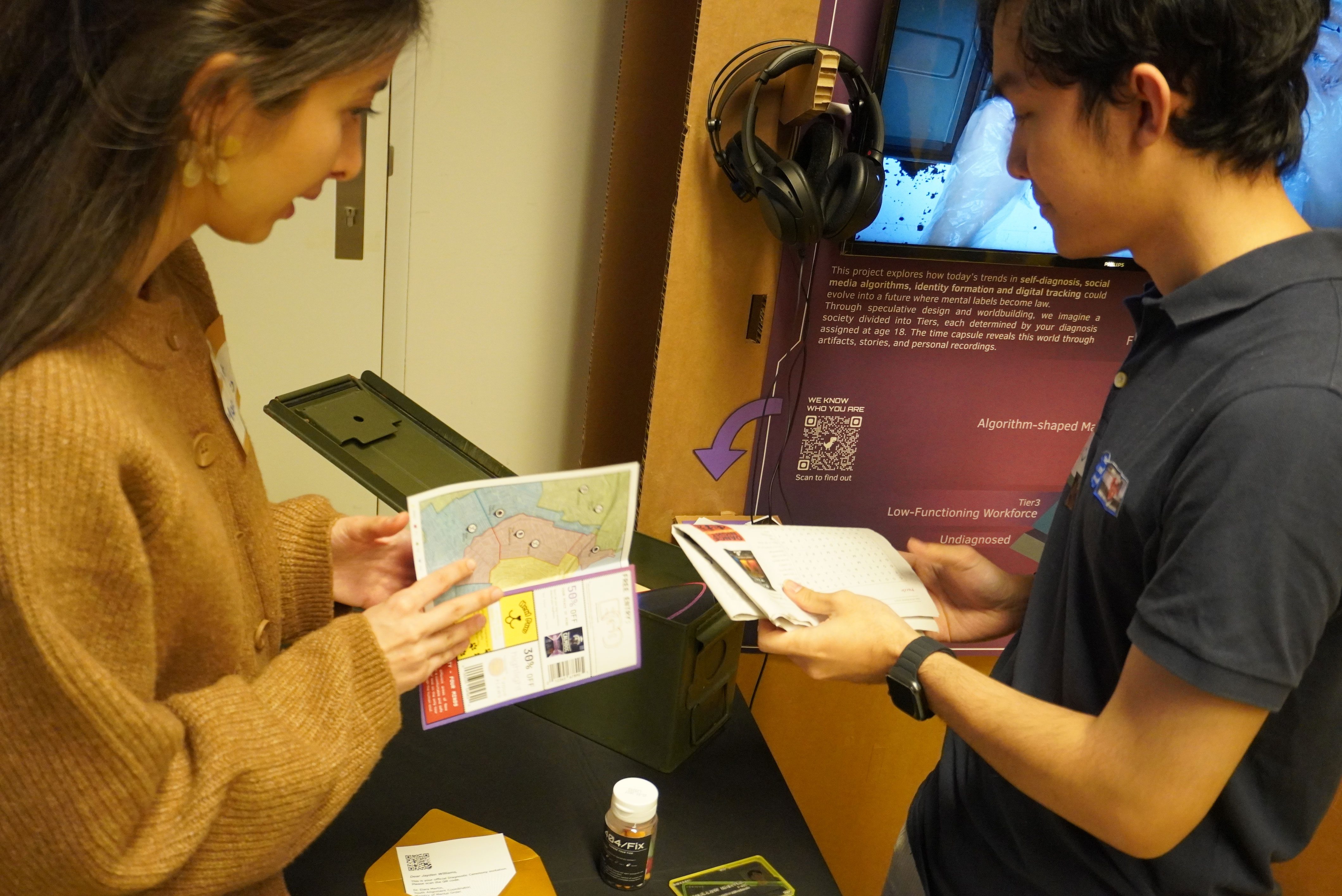
- Time Capsule: A collection of physical artifacts (diegetic prototypes) such as illegal pills, friendship contracts, IDs and many more.
- Exhibition Trailer: introduces the atmosphere and narrative of this controlled future.
- Tier-Sorting Website: a digital scanner that simulates a "pre-ceremony assessment" by randomly assigning them to a social tier.
Challenges and iterations
The project followed an agile, design-by-doing approach. During initial testing at a feedback session of the programme (Feedback Feast), the team discovered that visitors were too focused on the trailer and ignored the physical artefacts because they lacked guidance.
To solve this, the team experimented with a numbered "archaeological" system but eventually found that a scavenger hunt mission, asking participants to discover what happened to a group of missing teenagers, was far more effective at turning passive observers into active detectives. Integrating the digital test directly into the trailer also improved engagement, as the experience felt personally relevant once the user was assigned a tier.
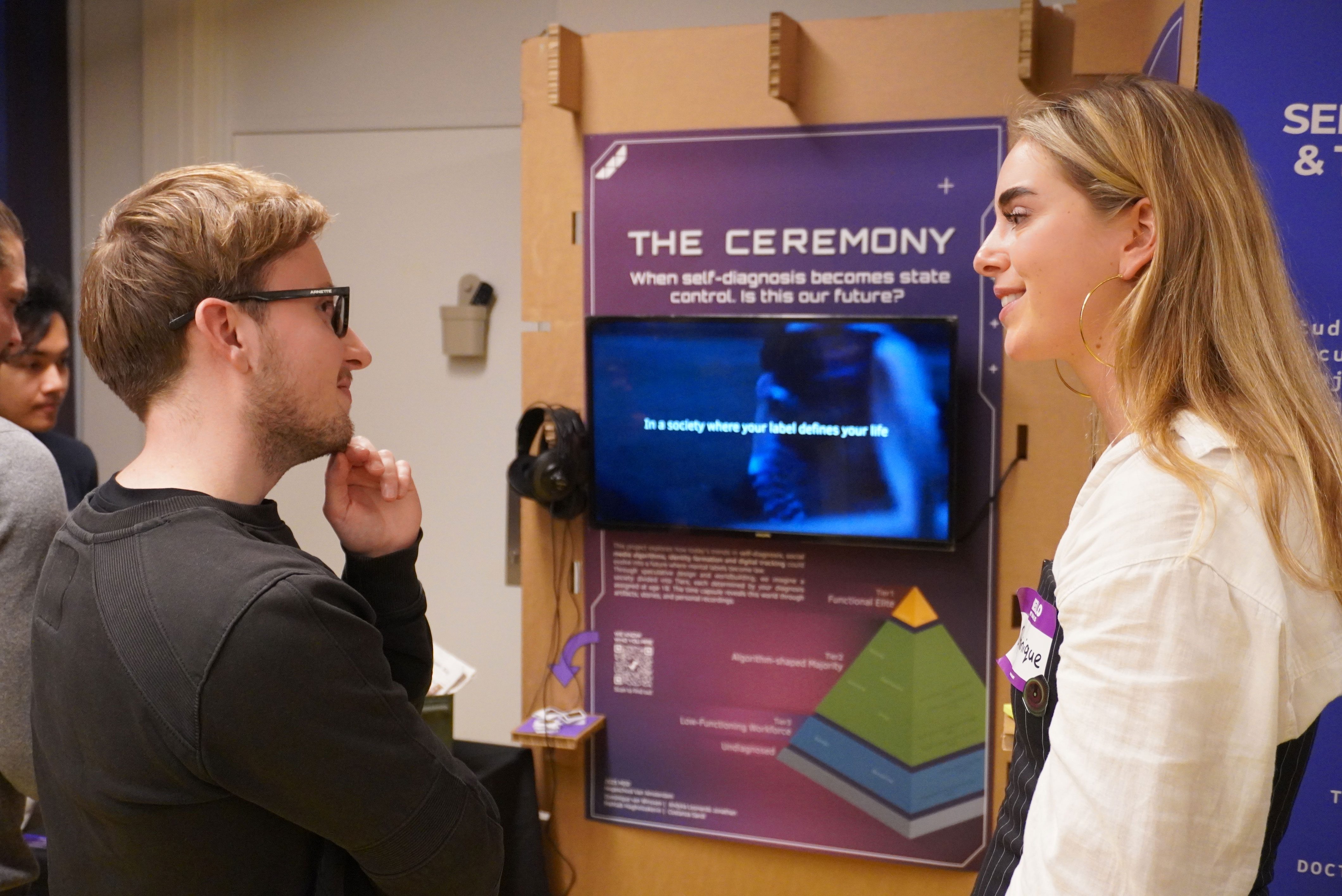
The project succeeded in blurring the lines between fiction and reality, with participants often debating their assigned tiers and expressing concern over their digital data. While it does not aim to solve the issue of teenage diagnosis, it acts as a provocation to spark critical conversations among teens, educators, and policymakers.