NW31 - Noticing Wind
Transforming perceptions of energy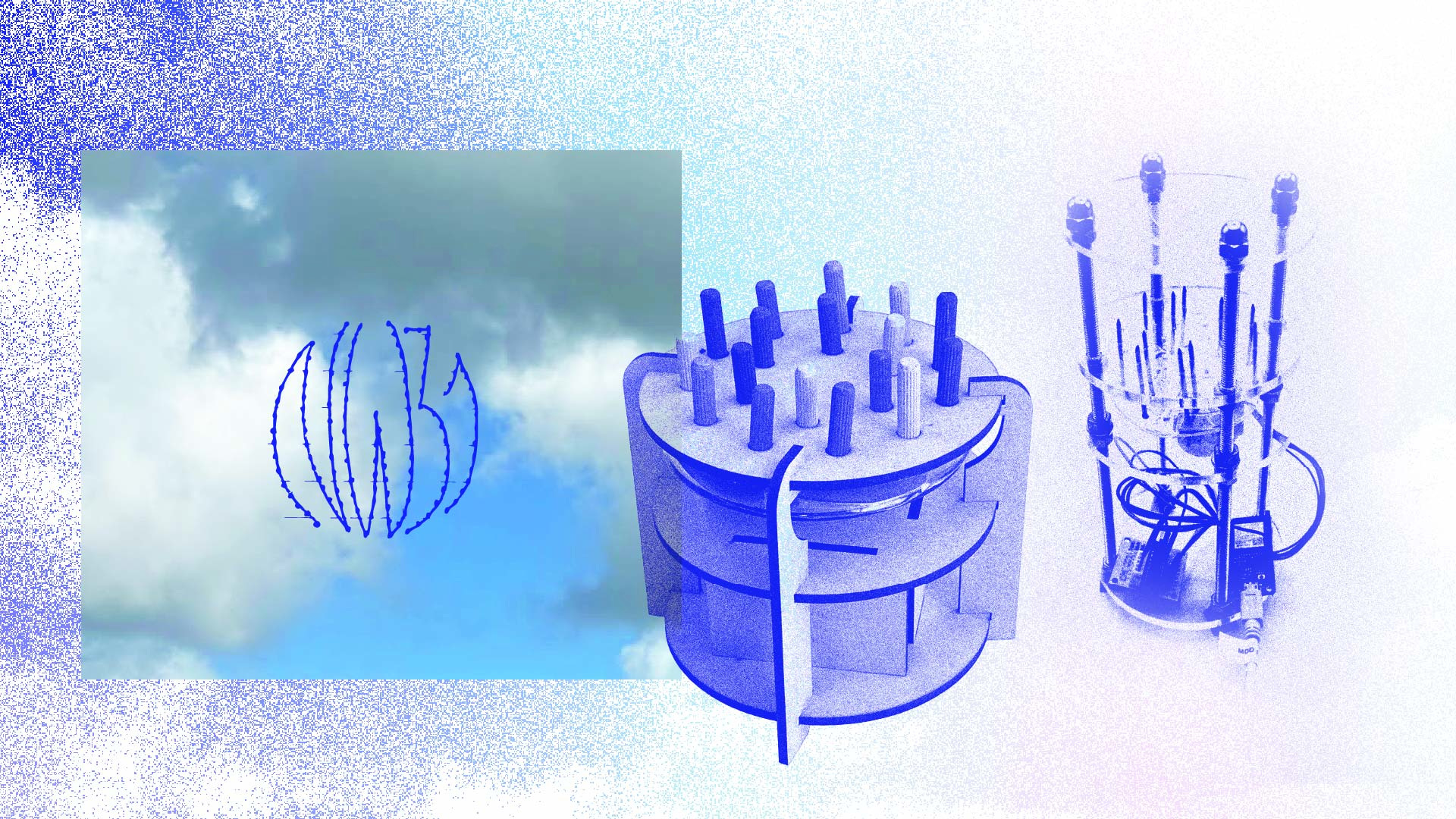
- Client:
- Team:
- Disciplines:
-
Schoolyear:
2025-2026
A research device that pulls live wind data from an API and transforms it into a real-time audiovisual experience, turning invisible energy into something you can hear and see. Developed for a two-week household deployment study investigating human–energy relationships in a post-fossil world.
Transitioning to renewable energy requires major cultural shifts around how energy is used according to variable weather patterns, day–night cycles, and seasonal rhythms. This research project aims to explore new experiences that might support positive human–energy relationships. Not to solve a problem or change behaviour directly, but to open up a new way of noticing wind, and observe what naturally shifts when people live alongside it. We believe this tangible translation of energy can bring us creative insights for future energy designs.
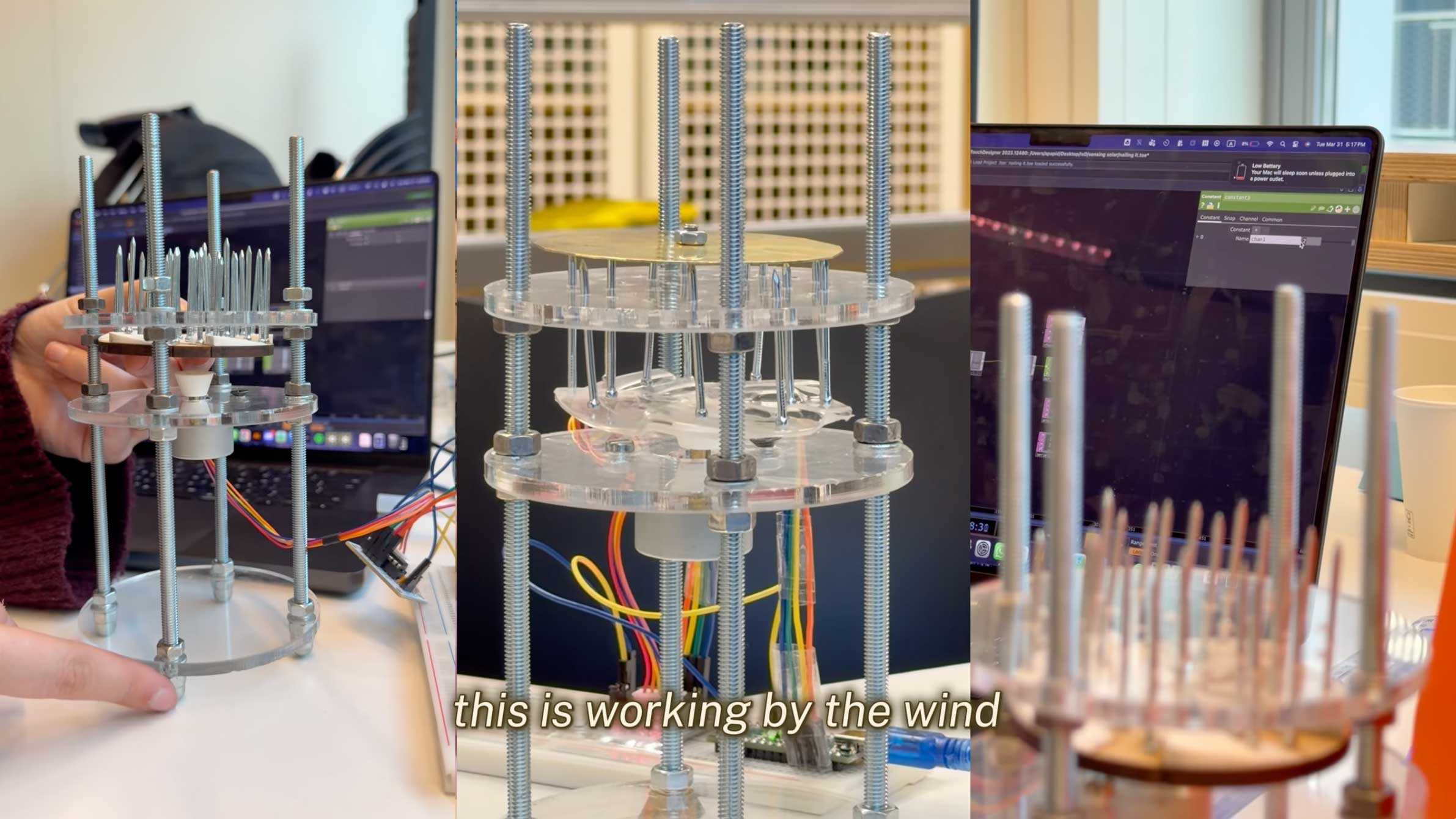
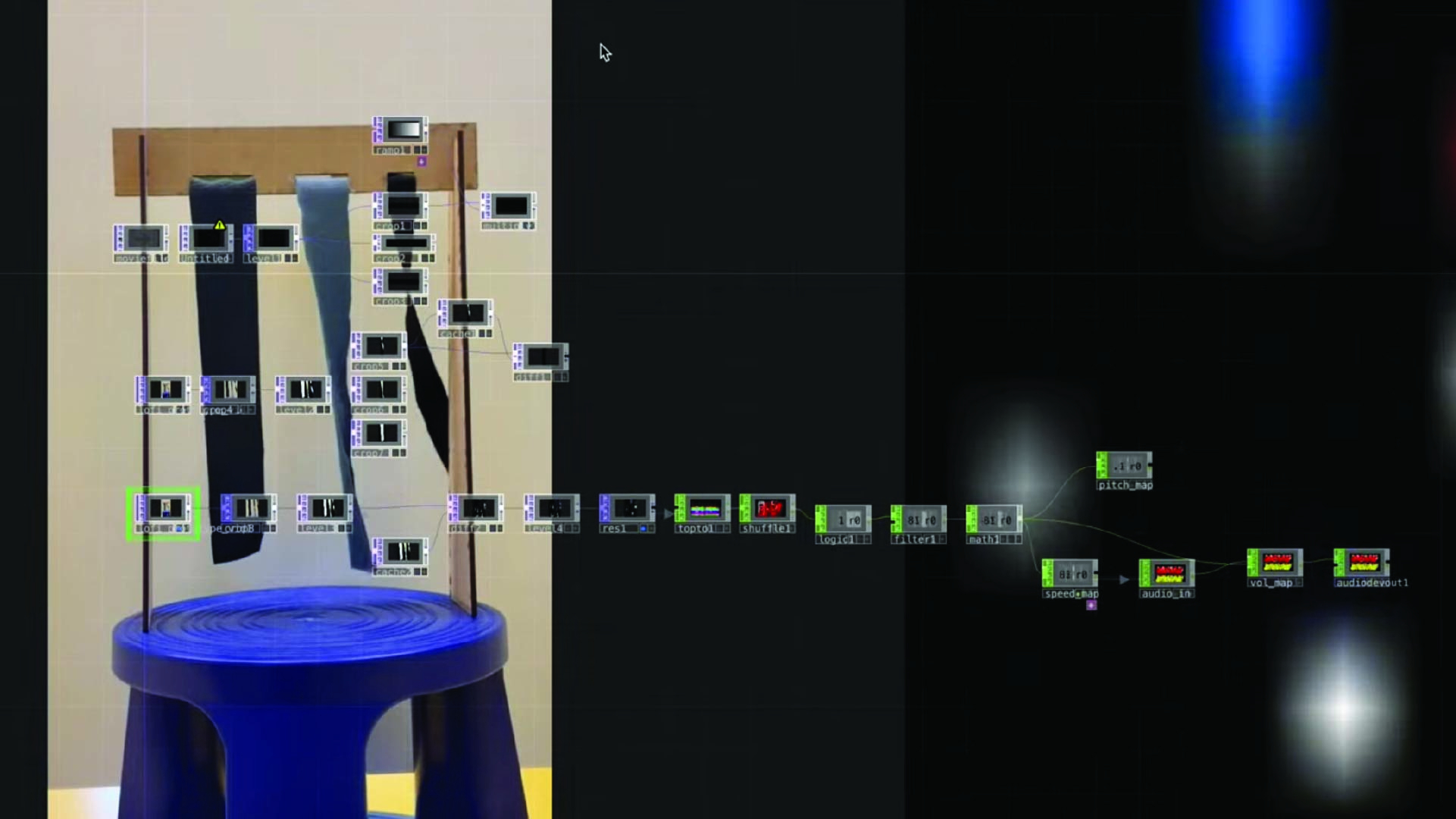
Noticing Wind is a motor-driven device that speeds according to the wind's speed, turning invisible energy into something you can hear and see. An Application Programming Interface (API), a system that fetches real-time data from an external source, pulls live wind data into TouchDesigner (a visual programming environment). That data drives a motor. On the motor, a leveled disc lets a series of nails slide and fall, creating a sound pattern.
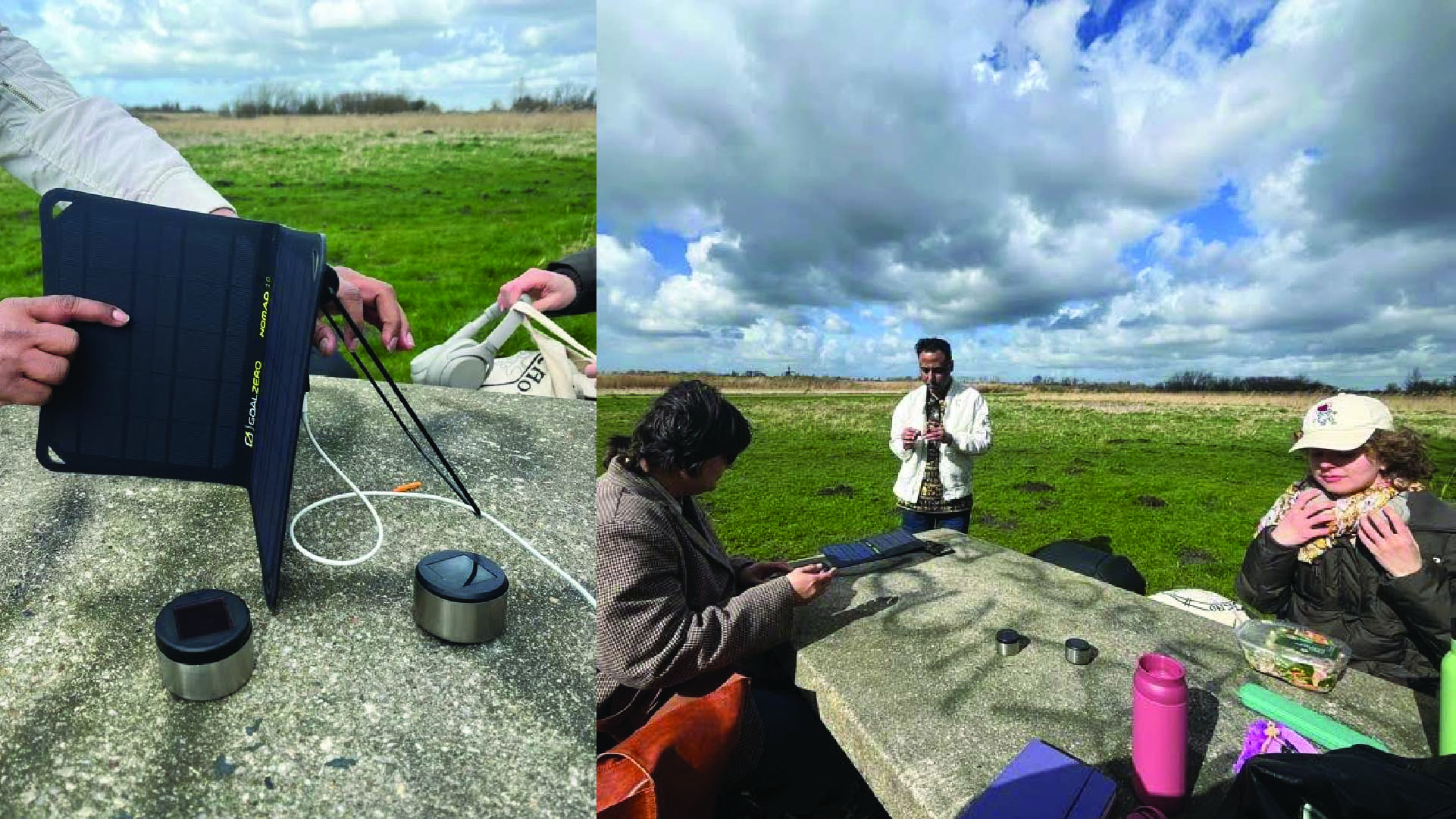
The design grew from a no-screen experiential week of noticing and documenting, later realised as situated. The team visited Zaandam's natural reserve, explored materialities at a flea market, and attended exhibitions exploring solar patterns. Working individually, each member developed a personal perspective on the task. This awakened noticing as a research method and brought ideas, sketches and insights from everyone. The common ground: noticing and perceiving weather patterns. Wind movements and sun reflections had audio qualia. All visual patterns translated into melodies in our minds.
This led to two experiments. A wind harp: three different weighted ribbons placed outside, moving by the wind. Tracking movement by camera and pixel mapping in TouchDesigner, each movement would trigger sound. Moving Leaves: light sensors placed between the branches of a plant, tracking movement through light and shadow and reacting acoustically.
These experiments helped us realise that our initial experimentation with sensors presented two problems: accuracy and privacy. The movement tracking wasn't accurate enough to represent concrete wind data. The research was aimed for a domestic environment, which made camera placement an area of conflict of privacy. To avoid these problems, we experimented with data fetched through an API. This gave us freedom to experiment and have weather data that is validated, calibrated, and consistent.
A defining design decision was to embrace simplicity. A spinning disk is physically simple but conceptually rich. Wind speed is something we don't really notice but can understand when aware. Working on a single source of data helped this research have clear insights and make the change of wind perceivable. A design dilemma we faced was whether to make the sound continuous or to only trigger it when a change of speed appeared. We decided that a continuous sound would serve the research timeline and work as an ambient machine, slowly being acknowledged as wind's sound.
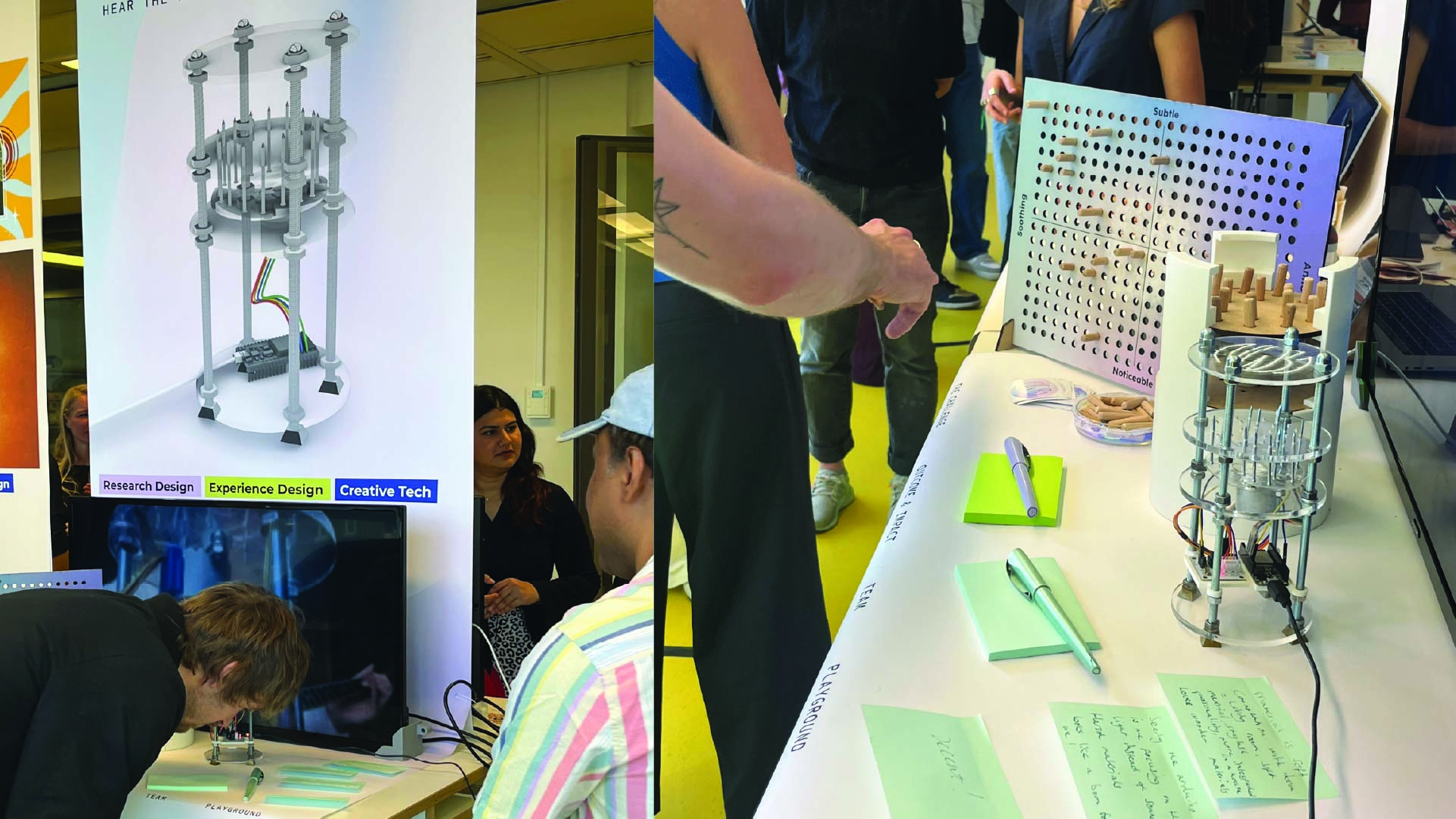
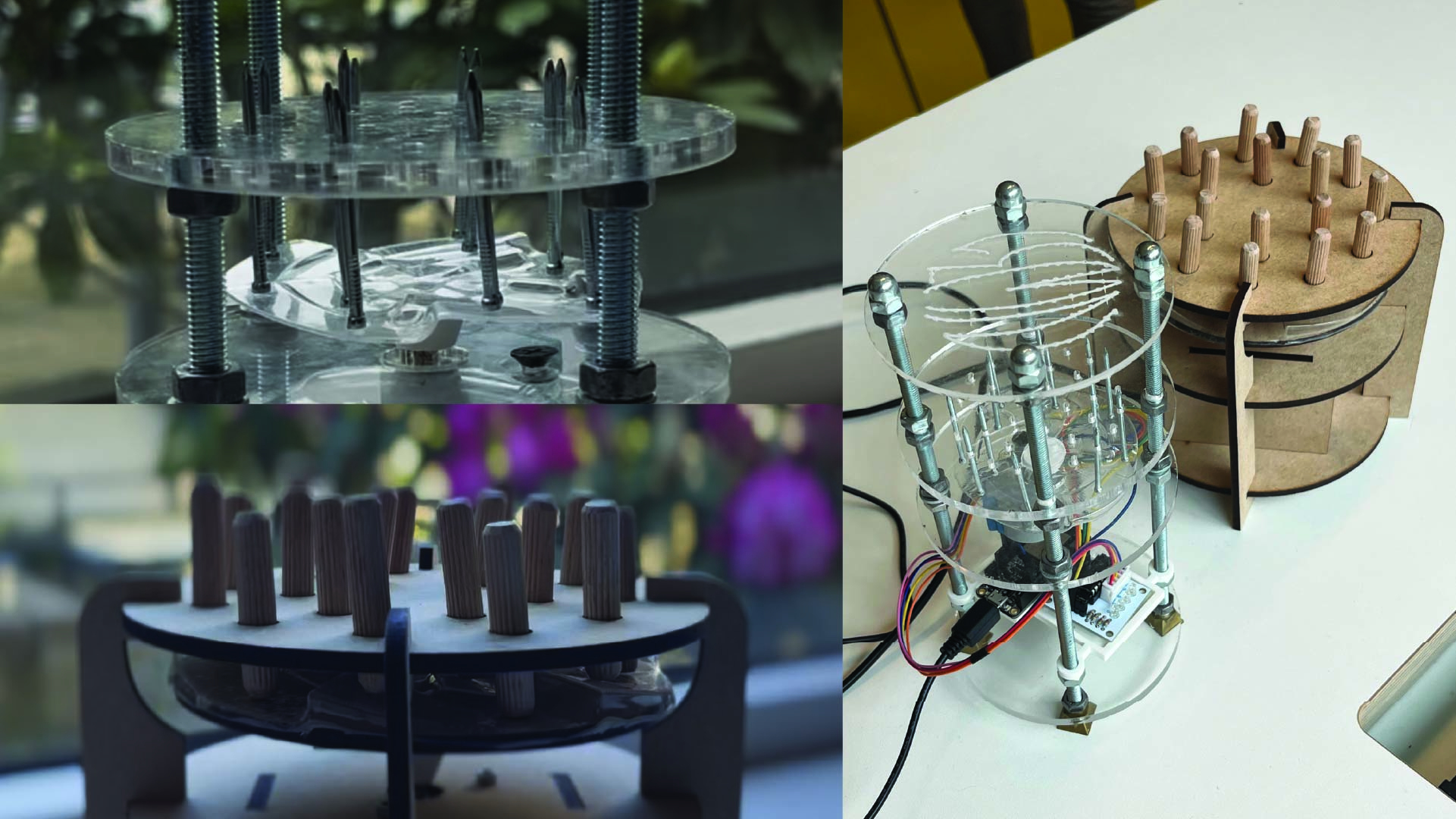
Throughout the research, the aesthetic transformed from transparent/metallic to earthy/wooden. This transition emerged from observation of reactions when people noticed it and made their own interpretations of the look and the sound. Most noticers described the first prototype as edgy and threatening, and shared that the exposed technology was distracting. The second, wooden prototype was preferred for its numb sound and its "homey look." One participant said: "It's like you have an open window without having an open window." Another: "The biggest impact was when it was stopping."
We believe this tangible translation of energy can bring us creative insights for future energy designs. This research was developed in a two-month period, so every insight gathered is mostly a strong indication and not a rule. Future development could explore longer deployments, more participants, or different weather variables. The impression of the sound changes depending on the time one spends with it, and that is where the most interesting questions begin.