Gradual Digital Transformation in Fashion Product Development
A Research Through Design Study on Situated Learning for Digital Sampling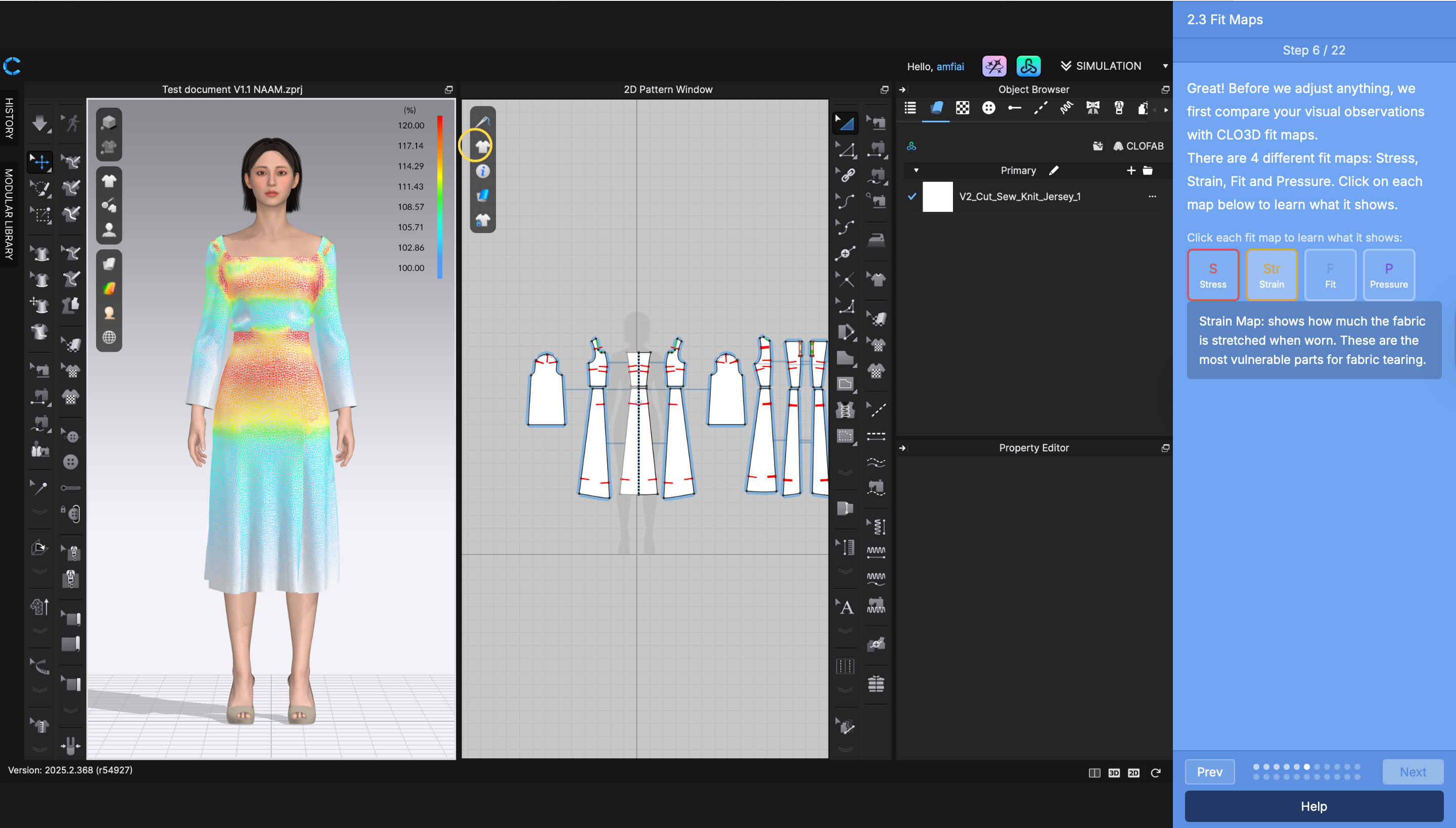
- Client:
- Team:
- Disciplines:
-
Schoolyear:
2025-2026
Fashion companies are increasingly adopting 3D CAD/CAM technologies to reduce physical sampling and improve communication throughout product development. However, implementing digital workflows remains challenging due to fragmented learning environments, workflow complexity, and uncertainty about how to integrate these tools into trusted, existing practices.
This project focuses on digital fitting, a critical stage within digital product development. Through a Research Through Design approach, the project investigates how situated-learning interventions can support the gradual adoption of digital sampling workflows within fashion product development.
It presents an interactive situated-learning intervention embedded directly within the CLO3D software environment. Rather than relying on external tutorials, videos, or documentation, learning takes place within the interface itself. This specific fitting intervention was designed to support users while performing digital fitting tasks, combining guidance, practice, and reflection within the environment.
The first steps were expert interviews, first-person experimentation in CLO3D and Browzwear, and the development of digital-to-physical garment fitting workflows. During this process, it became clear that learning digital fitting involves more than simply operating software. Users must learn to interpret garment simulations, analyse fit maps, understand material behaviour, and translate observations into pattern adjustments.
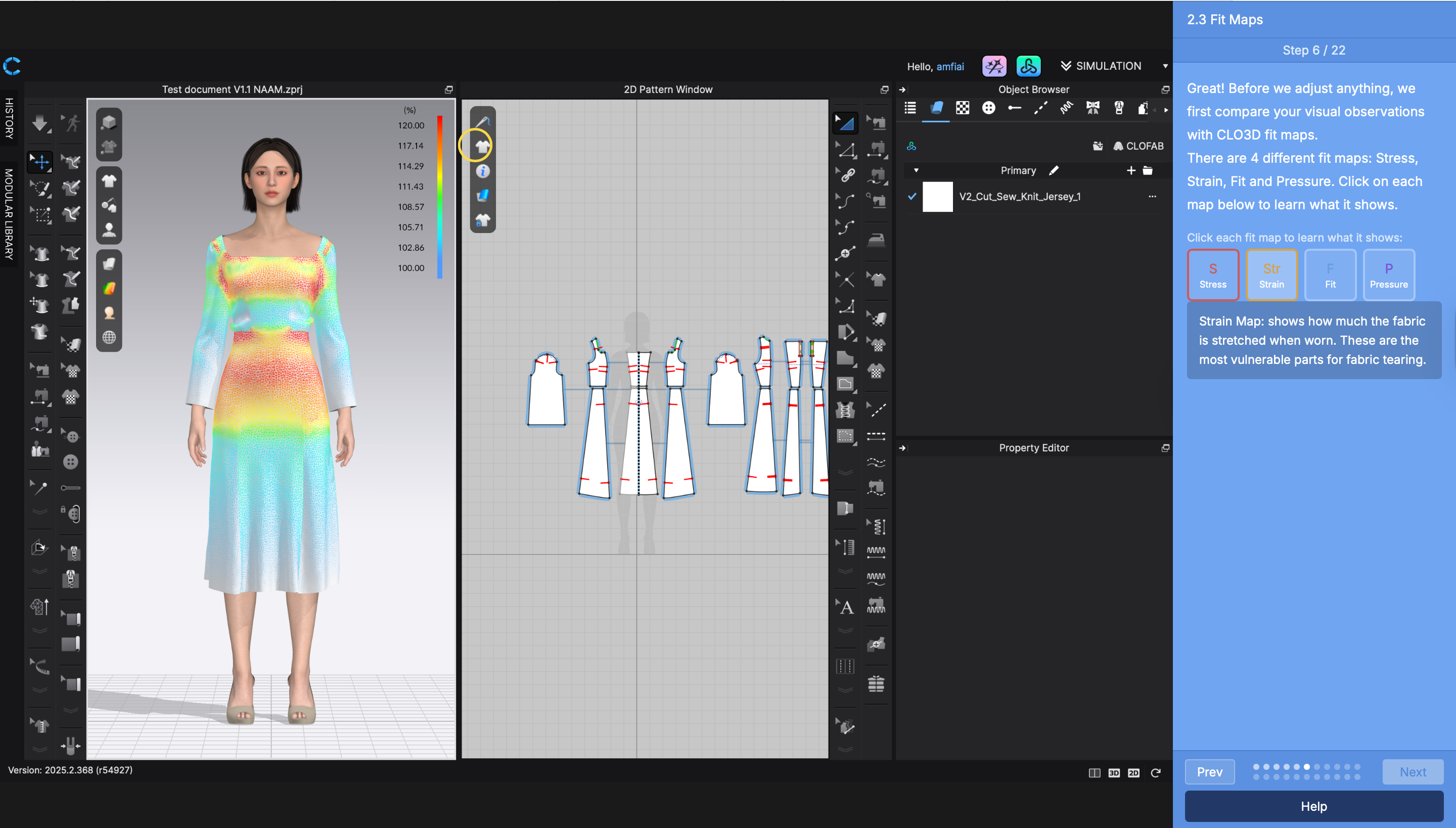
A central concept emerging from the research is the development of a “Digital Eye”: the ability to critically assess digital garment simulations in relation to their physical garment behaviour and production outcomes. User testing revealed that participants were often able to identify fitting issues but struggled to determine how those issues should be addressed through pattern adjustments. This demonstrated that successful digital fitting requires a combination of digital skills, interpretation, decision-making, and pattern knowledge.
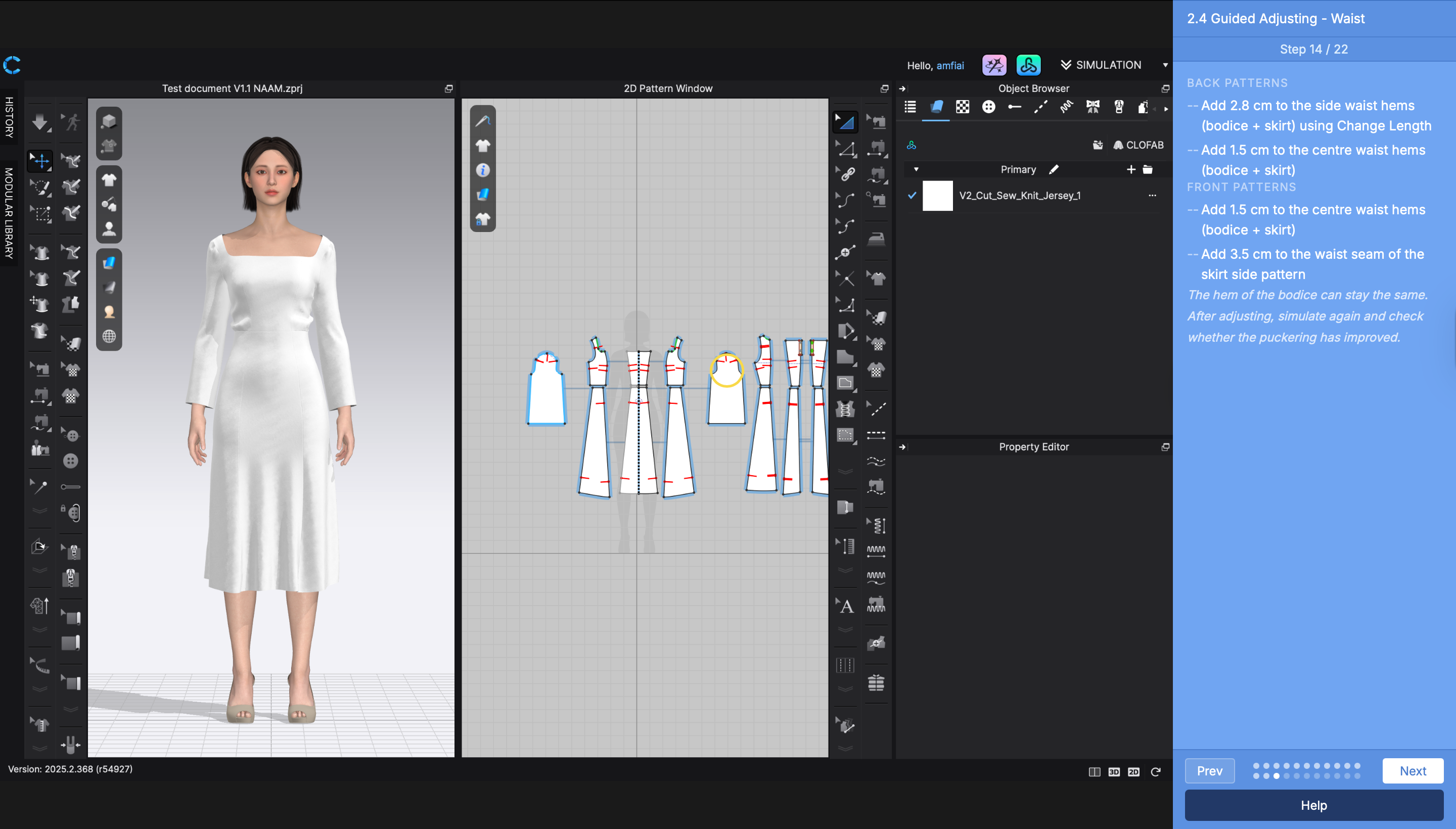
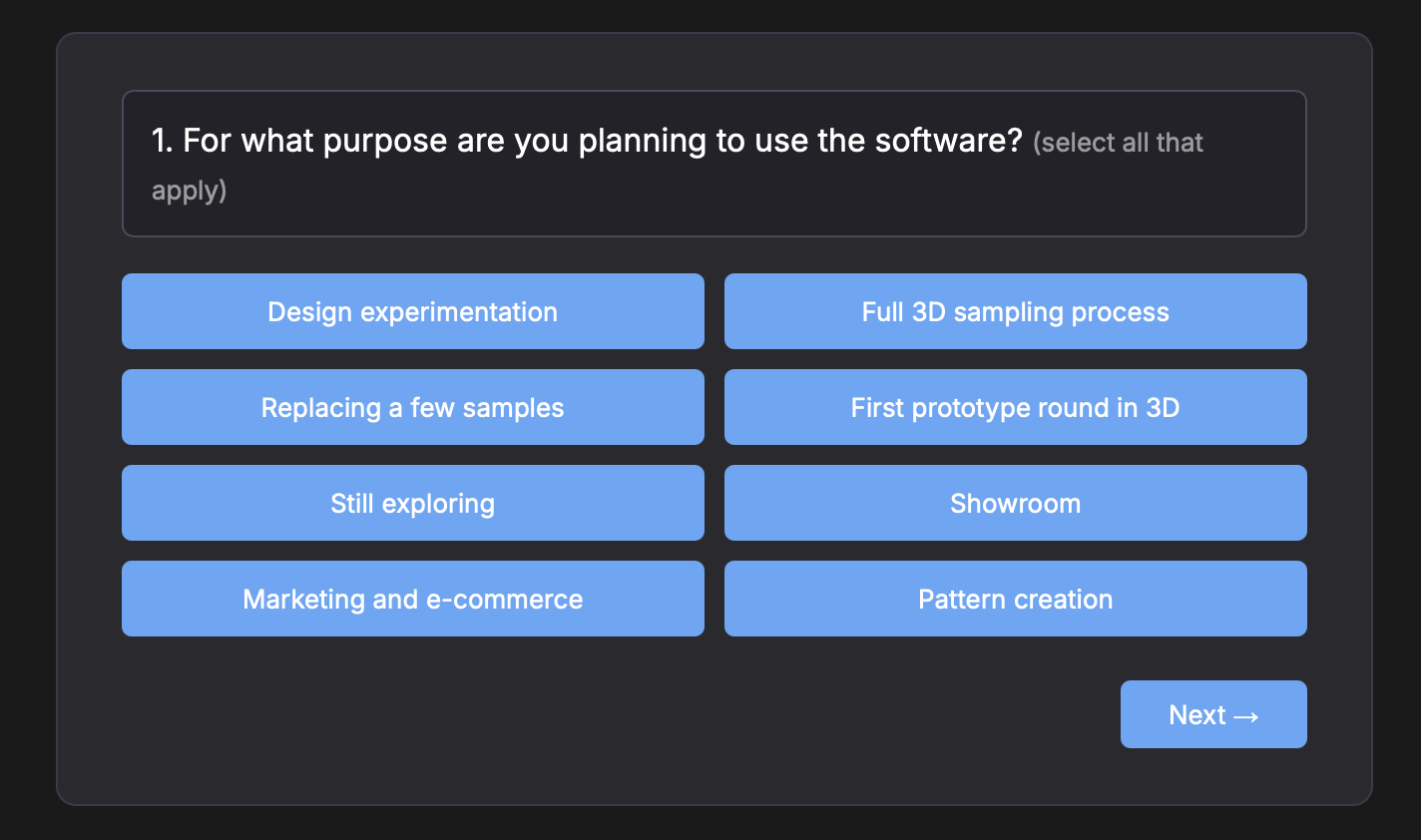
Based on these insights, a prototype was developed consisting of a personalised onboarding flow, embedded workflow guidance, fit-map interpretation support, pattern-adjustment explanations, Digital Eye training exercises, and a final assessment system. The intervention guides users step by step through fitting scenarios while explaining not only what decisions should be made, but also why they are necessary.
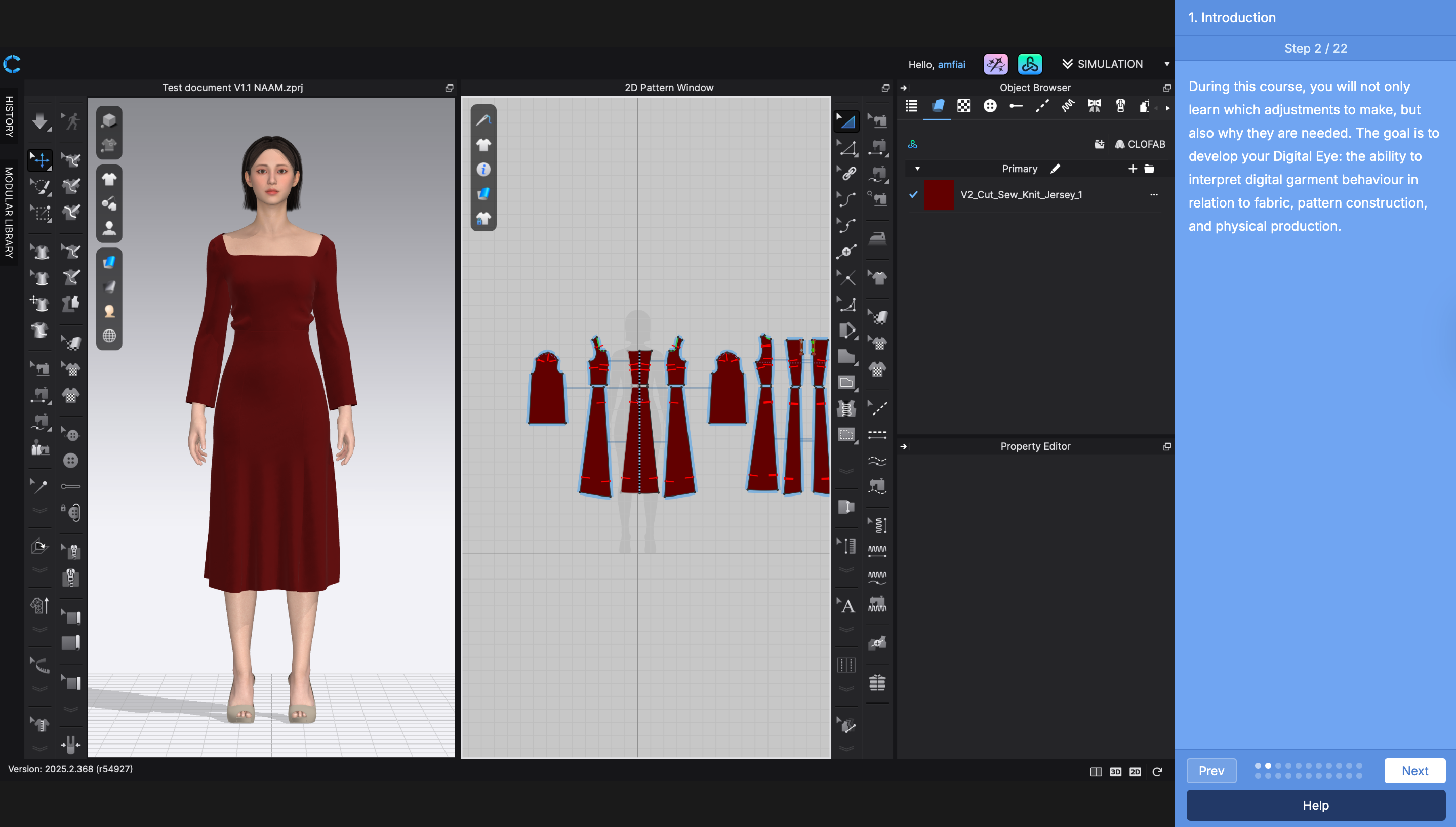
Several challenges emerged throughout the project. As the researcher was simultaneously learning digital fitting skills, the design process became highly iterative and reflective. First-person experimentation continuously informed new prototype features and research directions. This created a unique Research Through Design process in which the designer functioned as both learner and researcher.
The findings suggest that digital transformation within fashion product development is gradual rather than immediate. Learning remains fragmented, trust in digital simulations develops over time, and hybrid workflows combining digital and physical validation continue to play an important role. Rather than replacing existing practices entirely, digital fitting and sampling appear to complement and gradually reshape them.

Future development would focus on expanding the prototype into a fully integrated learning environment within CLO Academy or similar industry training platforms. Additional research could investigate long-term learning outcomes, team adoption, and implementation across different organisational contexts. The project suggests that successful digital transformation depends not only on technology itself, but also on learning, skill development, and organisational change. By supporting users directly within their workflow, situated-learning interventions may help make digital fitting more accessible, effective, and sustainable for the fashion industry.