Design Students Help Teenagers Who Self-diagnose Online
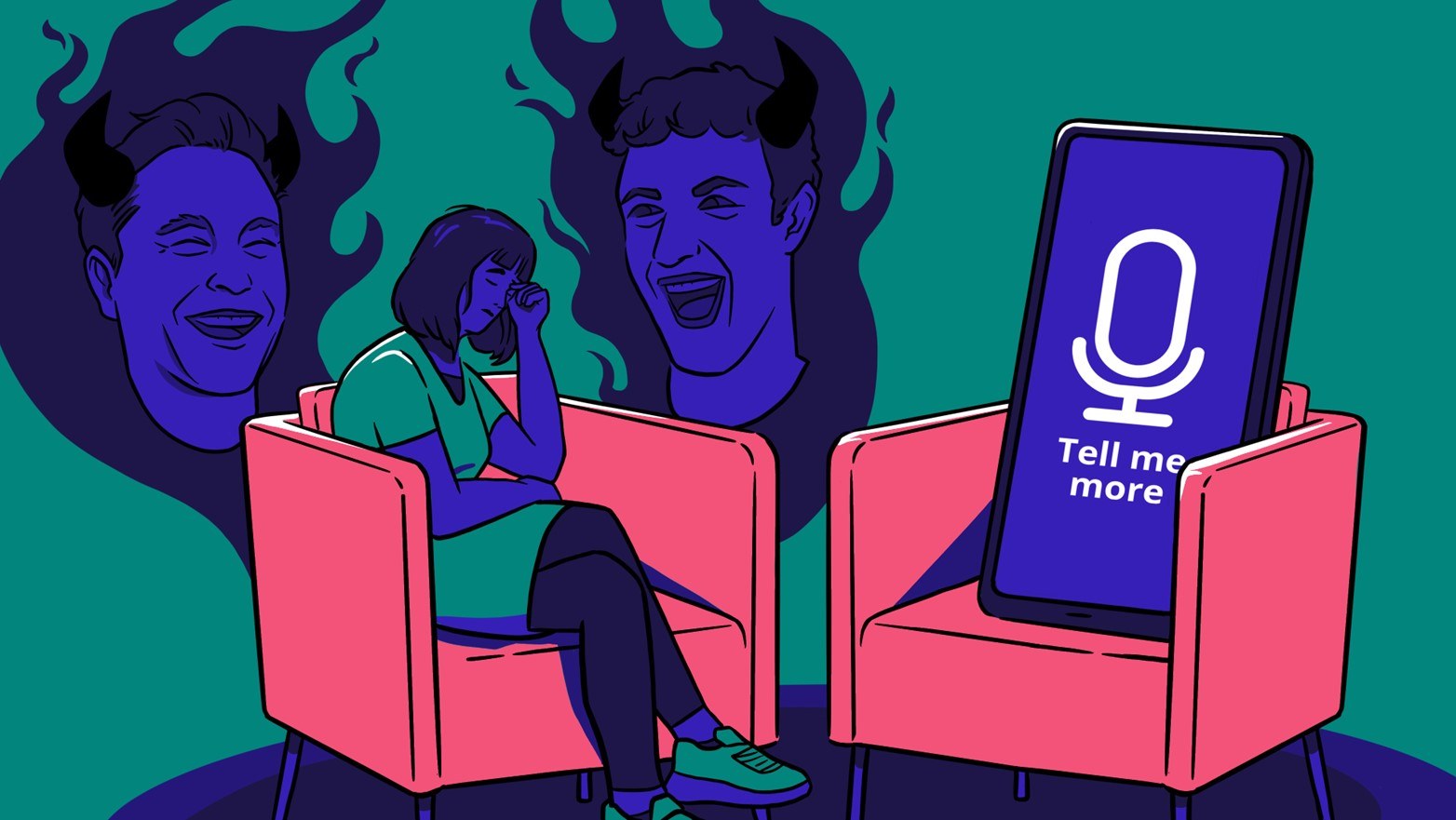
Teenagers are increasingly using digital tools and social media to diagnose themselves with mental disorders. Interviews with healthcare professionals show that these self-diagnoses are often incorrect. That is why students from the track Interaction Design of the Master Digital Design designed inventive tools to start a dialogue about this at school.
'Five signs you have ADHD' or 'my life with ASD': TikTok and Instagram are full of videos about mental health. Teenagers recognise themselves in influencers' stories about this. ‘Young people aged 15 to 18 are increasingly diagnosing themselves, especially in terms of mental health, based on social media content. Their diagnosis often falls under a DSM label’, says Jitske van der Lelij, a Master Digital Design student of the track Interaction Design. Teens are also turning to AI chatbots like ChatGPT for their mental problems.
Providing Insight
The students were tasked with providing teenagers with insights into the power and other mechanisms and interests behind this kind of content on major platforms. After all, how do algorithms influence your self-image? And who else benefits from your likes or posts about mental health? The Master’s students conducted research for their digital design; they also spoke to and tested their speculative designs on teenagers at the International School in Haarlem.
Two Sides
The students spoke to various experts for this challenge, including tech researchers from AUAS, a school psychologist and a school educationalist. Teenagers seeking answers is part of the phase life they are in, Jitske discovered. ‘Because the internet is always available, teenagers tend to turn to chatbots and these kinds of apps when facing problems or life questions, rather than talking to others.’ They appreciate that this can be done anonymously; the videos also offer young people guidance.
Revenue Model
At the same time, teenagers are indeed a revenue model for platforms. ‘Teenagers think mostly in the short term, and therein lies the crux, because that is exactly what makes them stick with this kind of content. They are not just the consumer, but the product itself, since big tech is after money. The apps are designed to keep them there. This happens behind the scenes, with likes, rewards and targeted ads.
Beware of Tech Bros
During sessions at the International School, the Master’s students did notice that teenagers are not naive. ‘They know more than we first thought: they recognise names like Musk and Zuckerberg. As for the other interests involved, that is not something they have concerned themselves with. They don't see how profit plays a role alongside attention to well-being.’
Play the Game
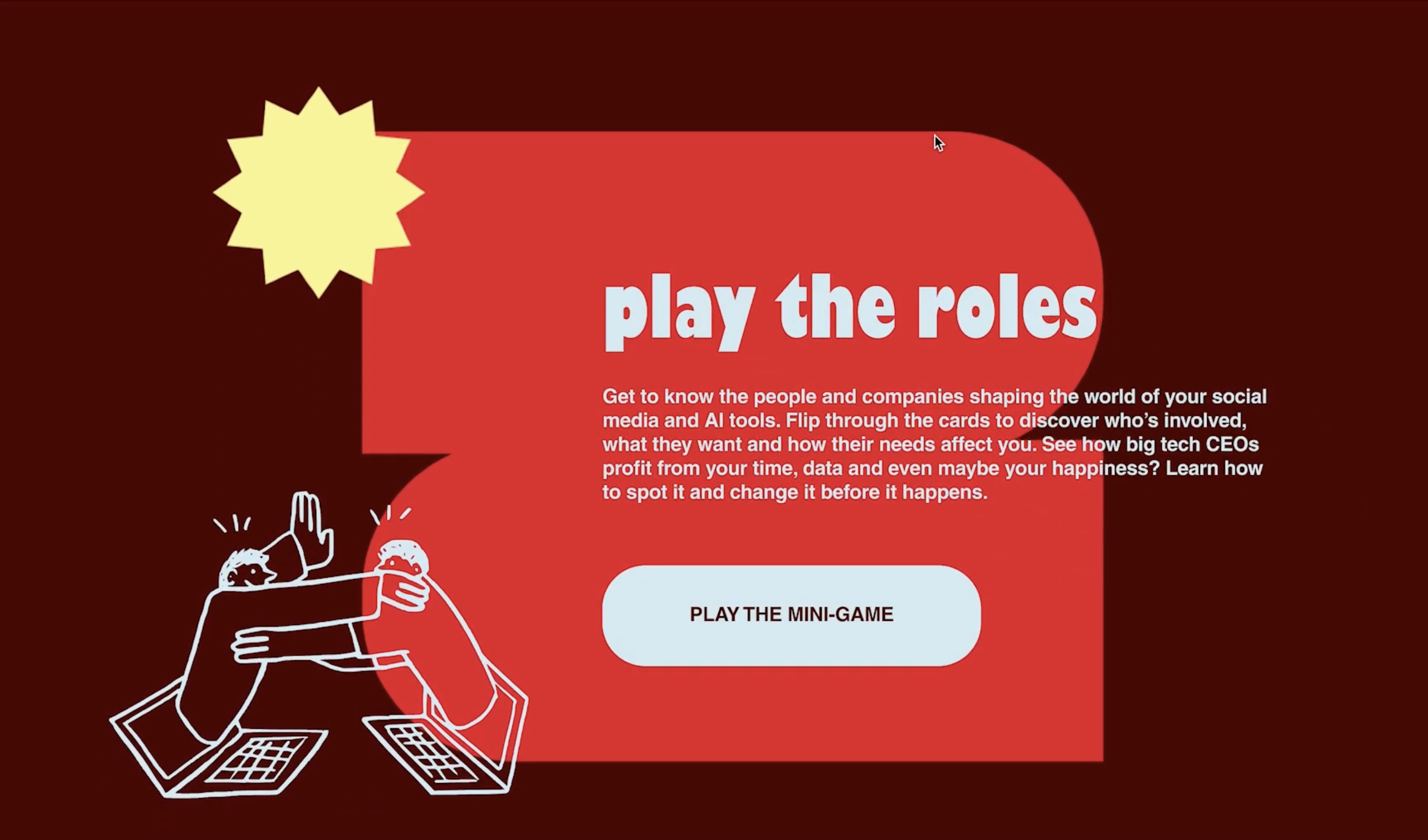
The preliminary research also showed that many parents do not have sufficient digital knowledge to start a conversation about this. This makes the classroom a crucial place. Jitske's team developed a web platform with minigames and a card game for that purpose, with a corresponding (tested) lesson design.
On the website, or offline, young people can play an interestingly designed game, where they step into the role of different people who have an interest in this kind of content. The game allows players to step into the shoes of an advertiser, tech company, influencer or parent, for example. ‘Because it is a role-playing game, they can start to understand the bigger picture,’ says Jitske. ‘They also gain insight into how these larger interests affect their self-perception.’
The classroom as a safe place
The students playfully tested their games and lesson design with the teenagers. This had an effect: students better understood how platforms work and took on different perspectives. They also had spontaneous conversations about privacy and ethics. ‘Supervision from a teacher does prove essential for deepening insight.’ It was notable that the design created a safe setting, which kept students from feeling stuck with unanswered questions.
Game Character Makes You Wiser
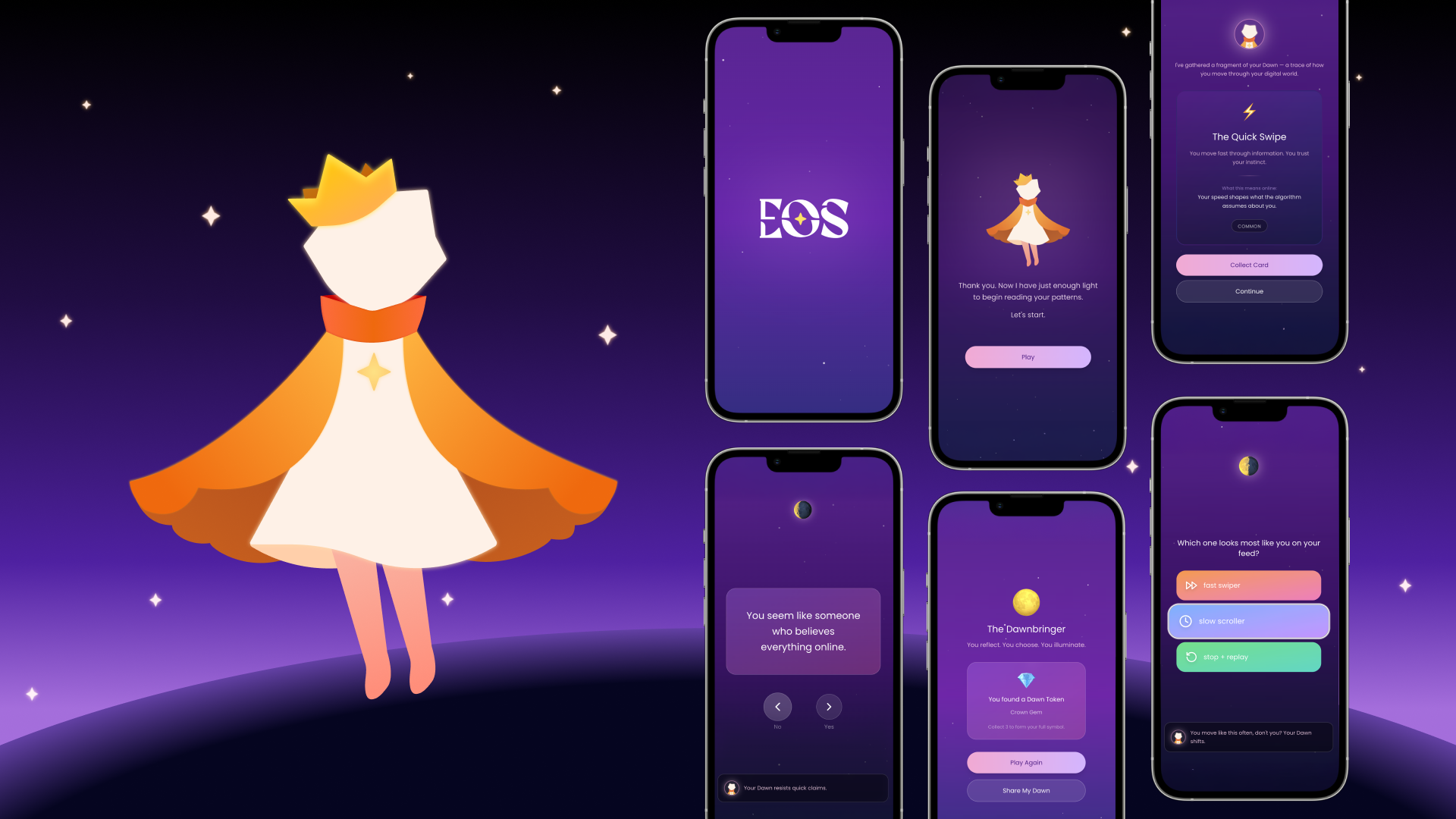
Karim Youseff's team came up with a different design: a game with a character (EOS) that guides you through recognisable digital situations.
Each time, the player makes an intuitive choice about situations that occur on social media. Which influencer do you trust the most? Each time, the teenagers can choose from four pictures. Or: which of these posts catches your attention? The game is presented in a visually appealing way and includes topics that teenagers find interesting.
Subconscious choices
The choices you make in this game are subconscious. ‘This game reflects their mostly subconscious behaviour on social media, such as which influencers feel trustworthy, your scrolling behaviour and more,’ says Karim.
A key game element is the 'Dawn Meter', which measures how aware and critical a player is. As they get the results, with there being no right or wrong answers, teenagers gain insight into their daily, mostly routine decisions online. ‘All these behaviours determine how they ultimately view themselves, as algorithms respond to every interaction,’ says Karim. ‘Because those patterns are mimicked in the game, players start to realise how algorithms create a personalised feed step by step.’
Critical Thinking
The game has been a great success, as it makes young people curious and feels like an experience, not a lesson. ‘Our research shows that teachers need these kinds of tools. They want to teach students to use algorithms better, but they lack suitable resources. With our design, we offer a concrete lesson in digital literacy that you can easily use in the classroom,’ says Karim.
The aim is not to discourage own research, but to help young people think about how their online environment affects their self-image. 'By understanding how their behaviour shapes their feed, teenagers gain more distance from the system,’ says Karim. 'Algorithms can influence what you see, but they do not determine who you are.'