Amlumnus Umar builds part-time job platform for internationals
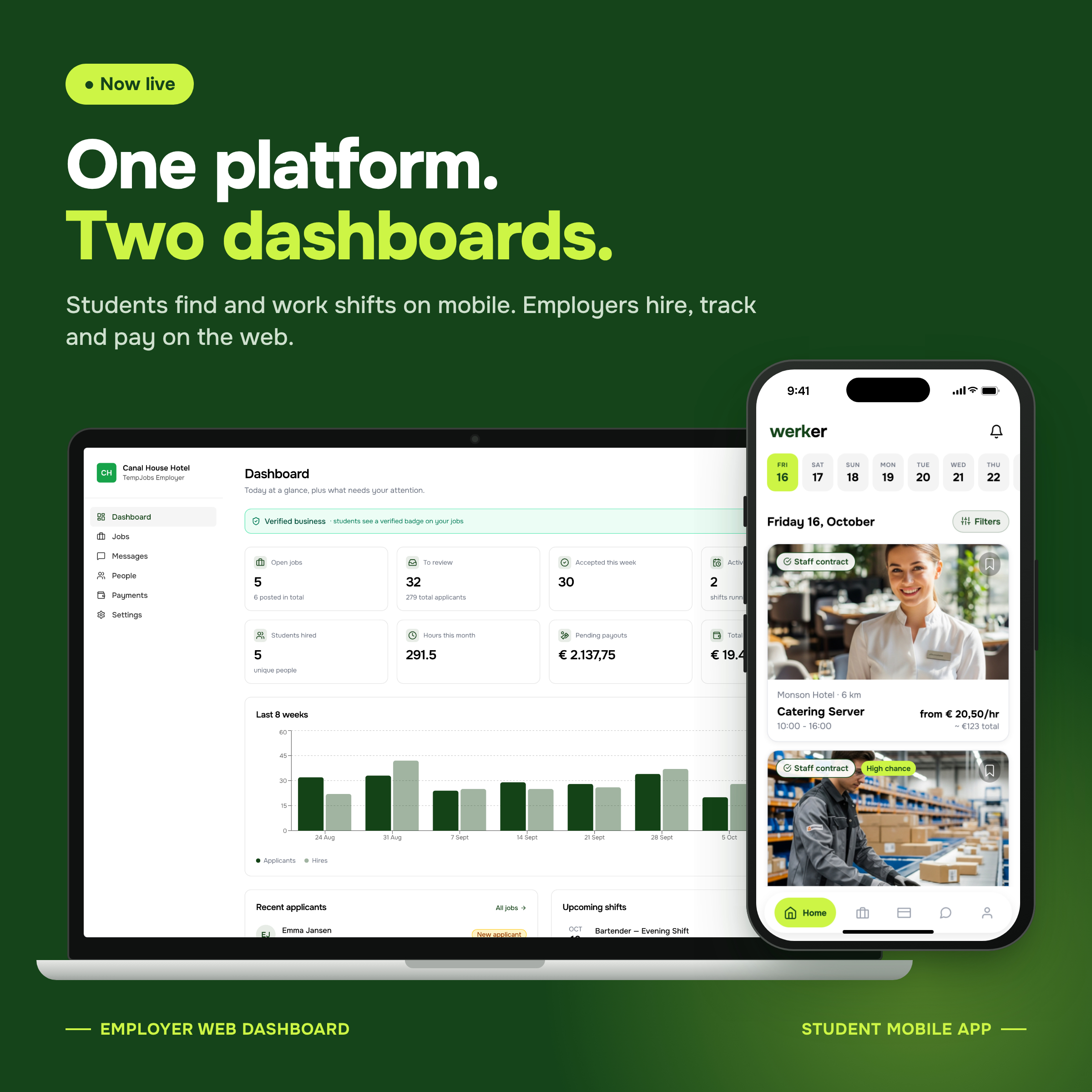
While studying for the Master Digital Design at Amsterdam University of Applied Sciences (AUAS), Umar Farooq realised how difficult it was for international students to find part-time work. Specific work restrictions apply to non-EU students studying in the Netherlands, which means employers often prefer to hire Dutch or other EU students. To solve this problem, Umar came up with Werker: a platform that connects international students with employers looking for staff.
In the Netherlands, students from outside the EU with a student residence permit rather than a work permit are generally allowed to work for up to 16 hours per week during the academic year, or full-time during the summer months of June, July and August.
Umar, who is from Pakistan, was able to find some freelance work on a few platforms, such as delivering orders, but finding a part-time job directly with an employer or through a temporary employment agency proved impossible. He had also heard that students from countries such as Iran, Azerbaijan and India faced the same problem, despite being keen to work while studying (the Master Digital Design has students with around 31 nationalities).
The reason why finding work is so difficult for international students from outside the EU is that employers have to apply to the Employee Insurance Agency (UWV) for a work permit (TWV) on their behalf. ‘Applying for that work permit doesn’t cost employers anything,’ Umar argues. ‘It’s not complicated either, but they do have to wait a few weeks for a response. That means that if someone from the EU applies at the same time and can start the very next day, employers often go for them.’
Off the books
Umar carried out some field research, asking various hospitality businesses whether they took on students from outside the EU. ‘That’s when I discovered that employers sometimes pay low wages off the books. Because work permits are so much hassle, some international students prefer to be paid in cash,’ says Umar. ‘But that’s illegal: you’re not officially registered and you don’t pay tax either. That’s why I believe there’s a need for a solution that allows these students to work legally.’
How Werker works for students
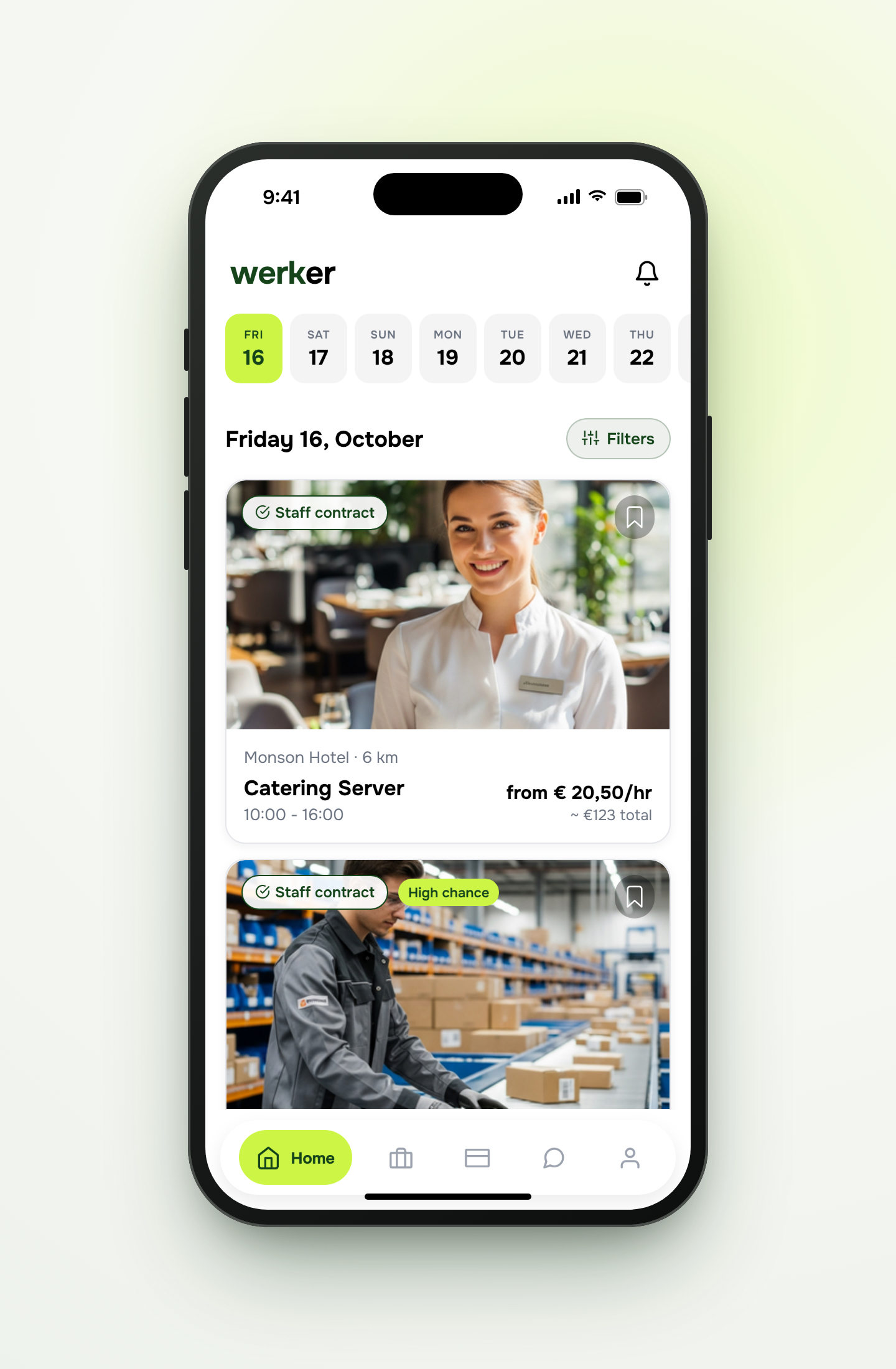
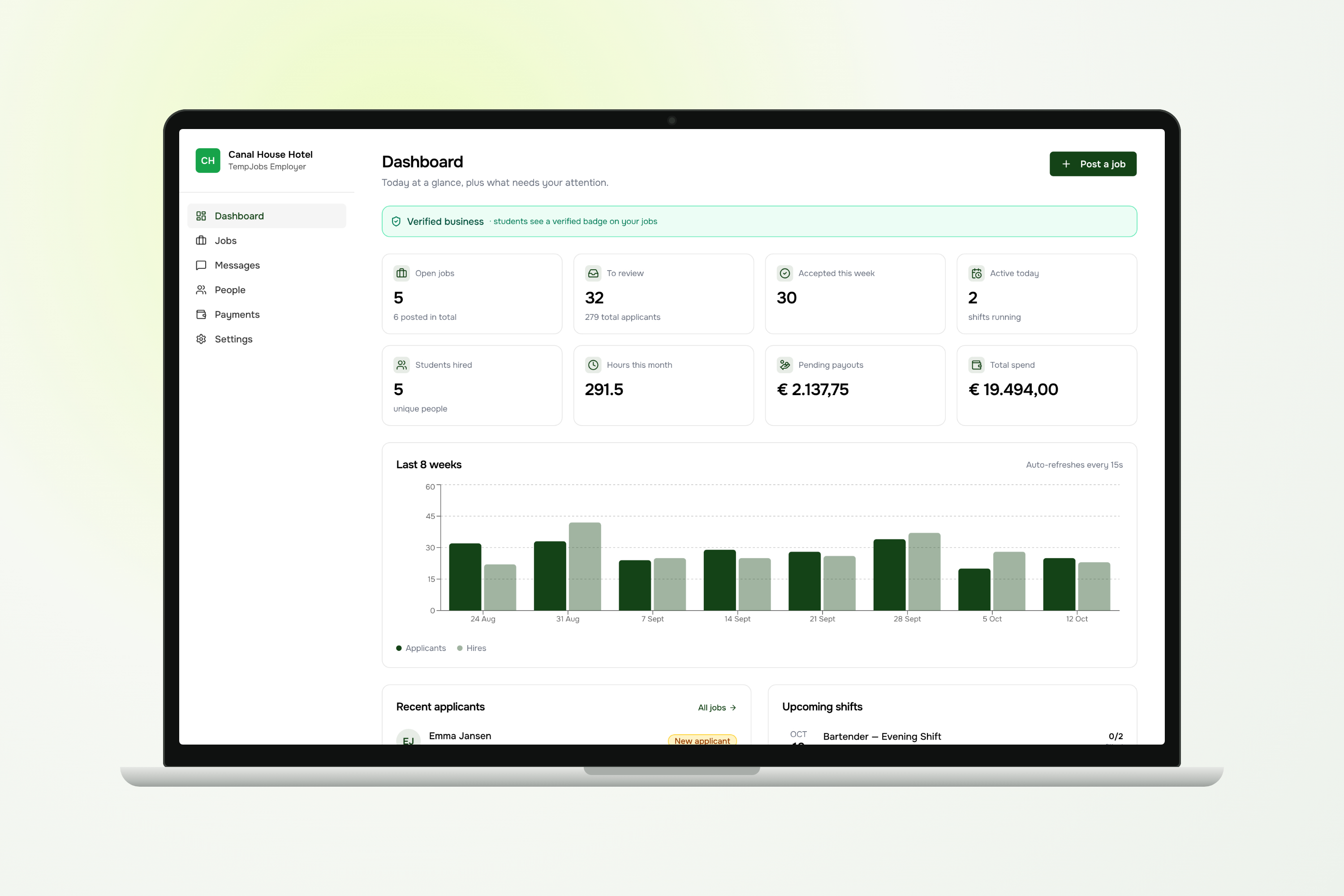
Umar also demonstrates how the platform works for students, who can apply for a shift as it becomes available on Werker. The platform then keeps track of their pay and the number of hours worked, with a clear indication of when a student has reached their working hours limit. Students and employers can also chat with each other through the platform.
Connecting non-EU students with employers
Umar, who designs websites and apps himself, came up with an idea. ‘What if I set up a platform that connects non-EU students in the Netherlands with companies that need them?’ With Werker, Umar aims to take the administrative effort of having to apply for work permits and sort out complicated contracts off employers’ hands, so international students can find work more easily and legally.
Umar will be able to maintain a pool of candidates on the platform, who are ready to work in various roles. Employers can then draw on this pool without having to go through the entire application process each time. ‘That will make things easier for both students and employers,’ says Umar.
Ensuring legal compliance
Umar built most of the platform himself together with a fellow student, making use of AI in the process. While studying at the Master Digital Design, he was able to take this idea further by joining an AUAS-run pre-incubator programme. ‘I was assigned a mentor and learnt more about entrepreneurship, which helped me develop the idea further. In addition, the AUAS Venture Centre helped me make lots of connections.’
Before Werker officially launches, Umar is exploring the legal requirements his platform needs to meet. He is in touch about this with the relevant Dutch authorities. As soon as his platform ticks all the boxes, he wants to start connecting students with employers. There is no shortage of students who are interested and have already got in touch with Umar. ‘What I need most right now are employers.’
Helping students even after graduation
Umar believes that his new platform can help young people from outside the EU even after they have graduated. ‘International students often take a year after graduation when they try to find a job.’
He also sees opportunities to collaborate with AUAS in the future. ‘Imagine if AUAS offered this platform, so international students could contact potential employers directly.’