Rooted in You
Seeing yourself as part of nature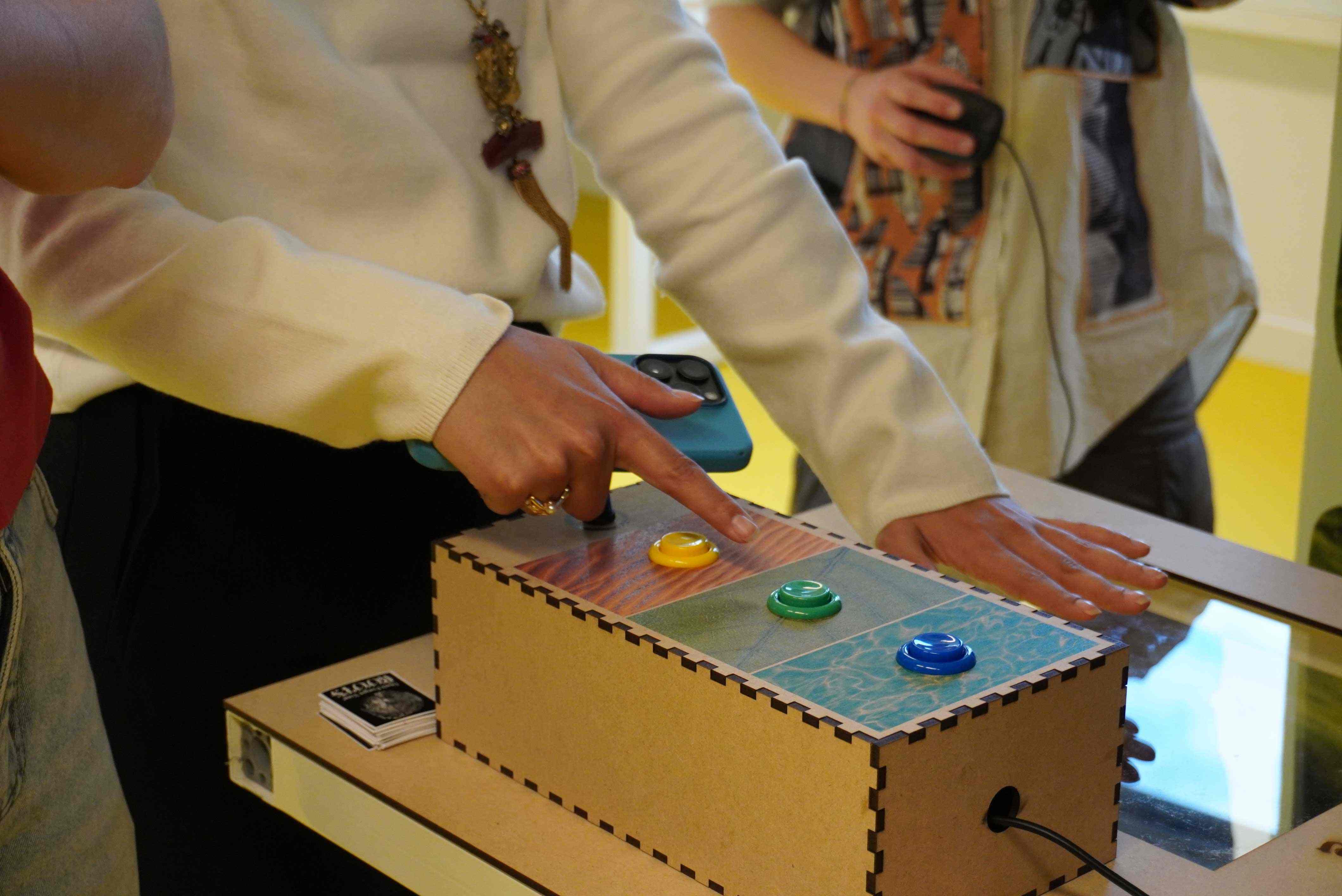
- Client:
- Team:
-
Disciplines:
Visual Design, Interaction Design, Experience Design
-
Schoolyear:
2025-2026
Children today grow up increasingly disconnected from the natural world. Nature often feels distant, abstract, or separate from everyday life. Rooted in You explores how an embodied, playful interaction can help children rediscover a sense of belonging to nature by seeing their own body reflected as part of it.
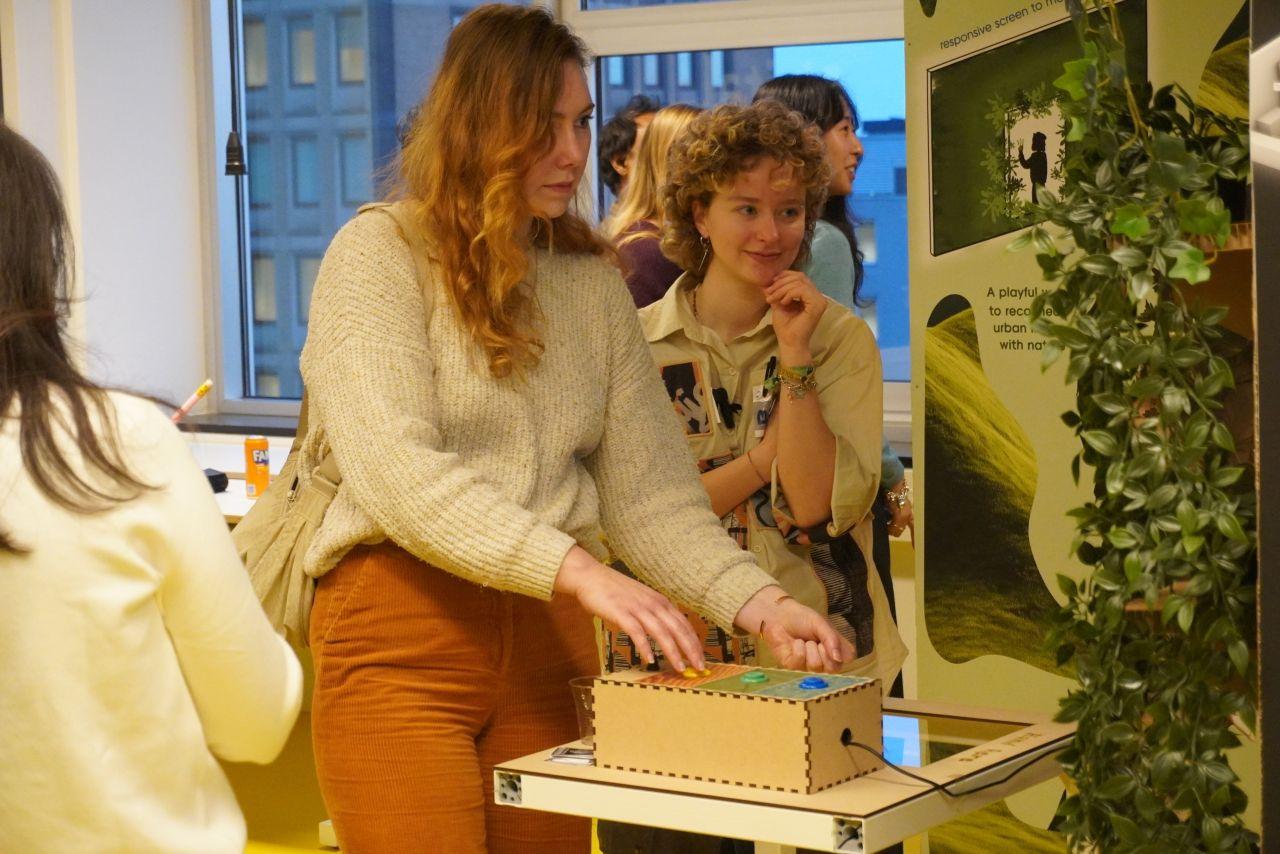
Rooted in You is an interactive museum installation designed for children aged 7 to 11. The project invites young visitors to place their hand on a glass surface and watch it transform, in real time, into natural elements such as tree branches, desert plants, or underwater corals. By merging body and environment, the installation encourages children to see nature not as something external, but as something they are part of.
The experience consists of a vertical screen, a glass interaction surface, and a physical control panel. When a child places their hand on the glass, a camera captures its shape. The screen then overlays the live image with nature-inspired visuals. Through three large buttons, users can choose different environments: forest, desert, or underwater. A rotary control allows them to move through a short visual narrative within each environment, such as a plant growing from seed to full bloom. There is no right or wrong outcome. Exploration and curiosity guide the interaction.
The concept emerged from early discussions about the idea of “home.” As a team, we realized that our shared home is the planet itself, yet humans often experience nature as something separate. Research into children’s play revealed that they prefer hands-on, fast, and challenge-based experiences rather than long explanations. Co-creation sessions confirmed that bodily analogies, personalization, and choice increase engagement and ownership.
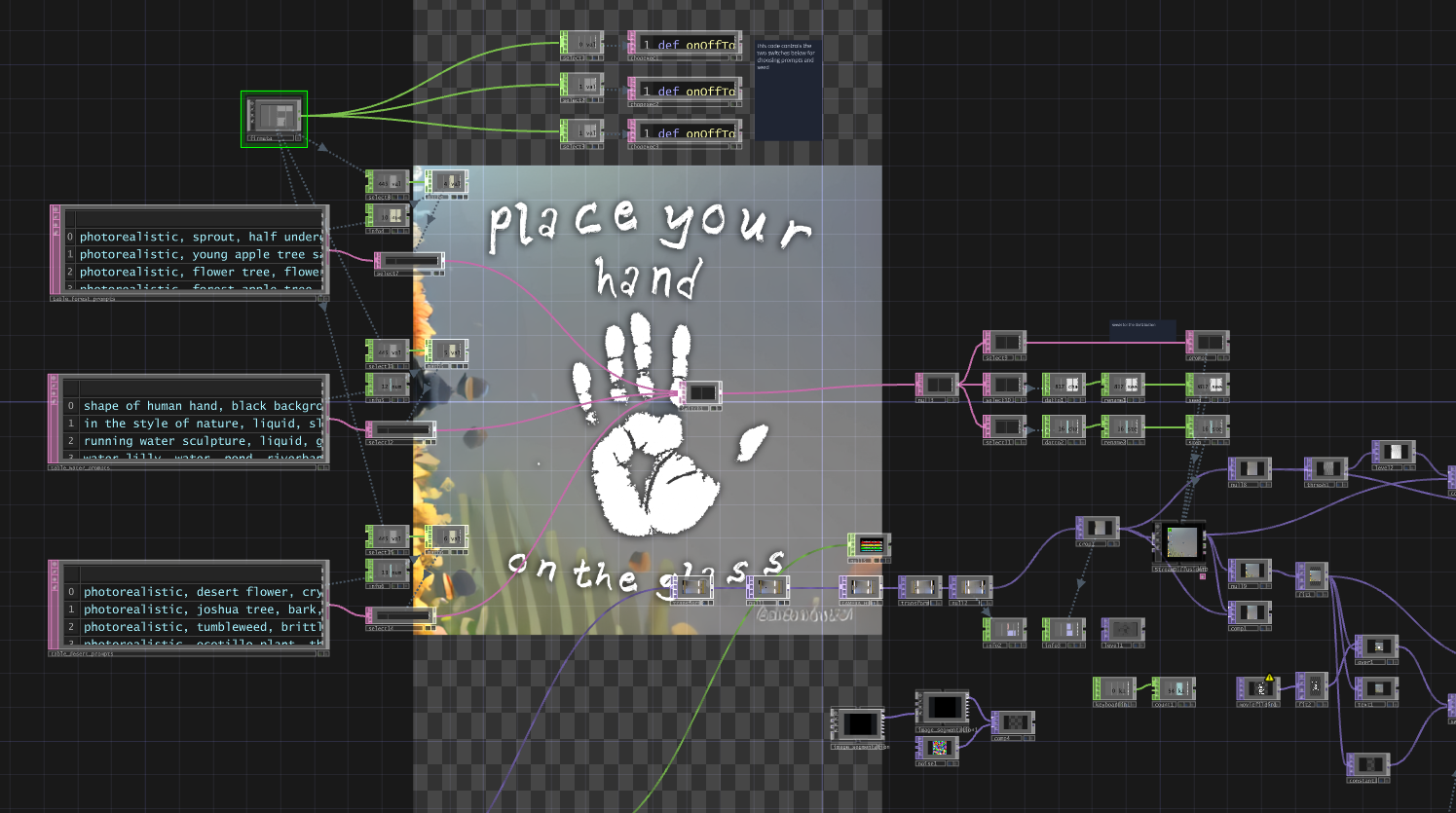
To create a sense of immediacy and wonder, the visuals are generated live using an artificial intelligence system that transforms the camera input into organic forms. This allowed the experience to feel responsive and alive, reacting directly to each user’s movements. At the same time, working with this technology presented challenges. The system required powerful hardware and careful calibration to run smoothly in a public setting. It also raised ethical questions about using artificial intelligence in a project meant to celebrate nature and aimed at children.
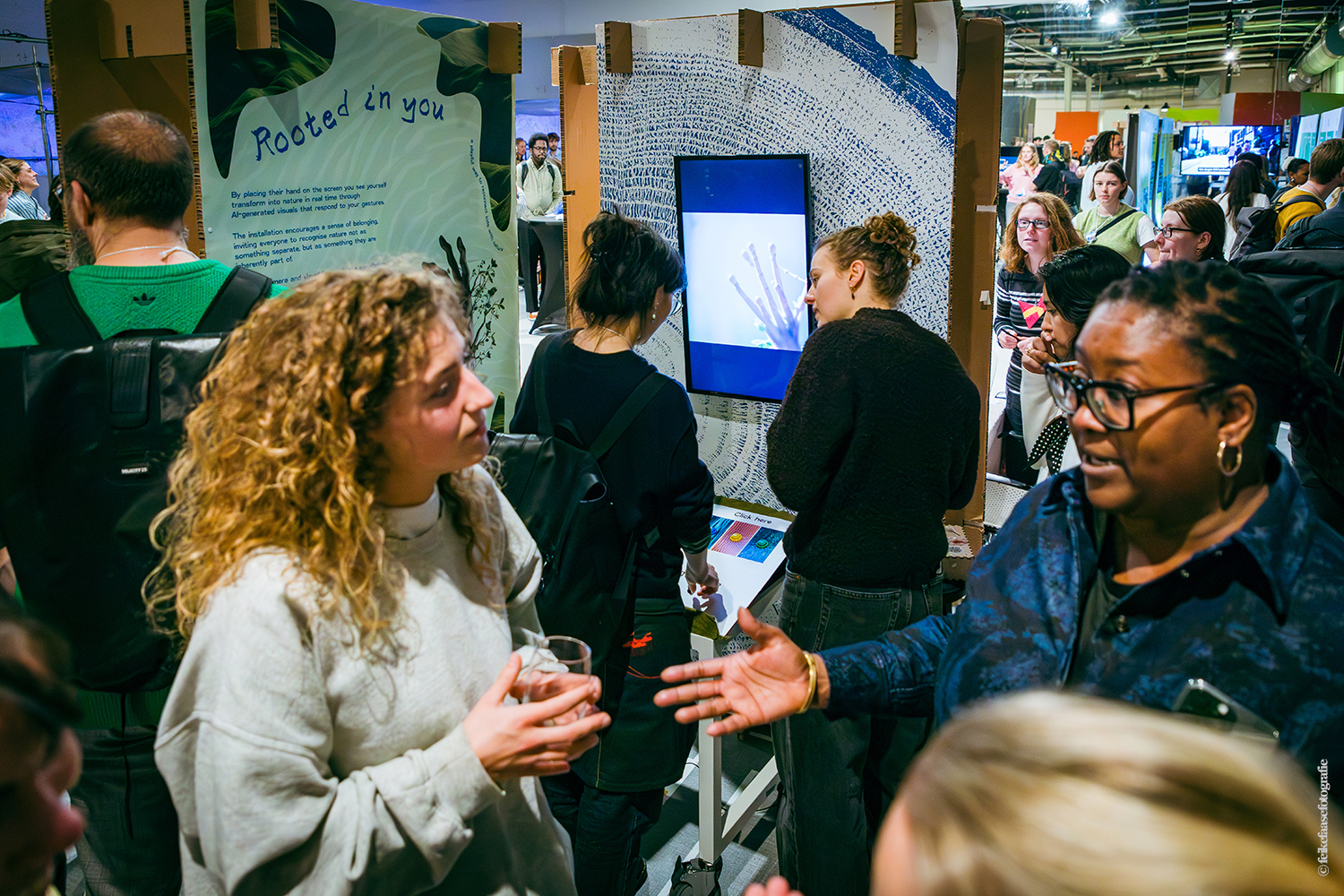
Designing the installation required balancing clarity and openness. The controls needed to be simple enough for children to understand instantly, while still allowing variation and surprise. Several iterations were necessary to align the physical interface, the visual output, and the exhibition context. Feedback sessions helped refine the interaction and reduce confusion, resulting in a more intuitive and shared experience.
Rooted in You ultimately focuses on inspiration rather than instruction. Instead of teaching facts about nature, it creates a moment of recognition. The child does not observe nature from the outside, but sees themselves within it.
Rooted in You could be expanded with additional environments, collaborative multi-user interactions, or non-digital modes of participation. Future versions may further explore how to communicate ecological values without relying on artificial intelligence, or how the installation could adapt to outdoor or educational settings. The project opens space for continued reflection on how technology can support, challenge, or complicate our relationship with nature.