Eos
A Reflective Game About Algorithms, Identity, and Awareness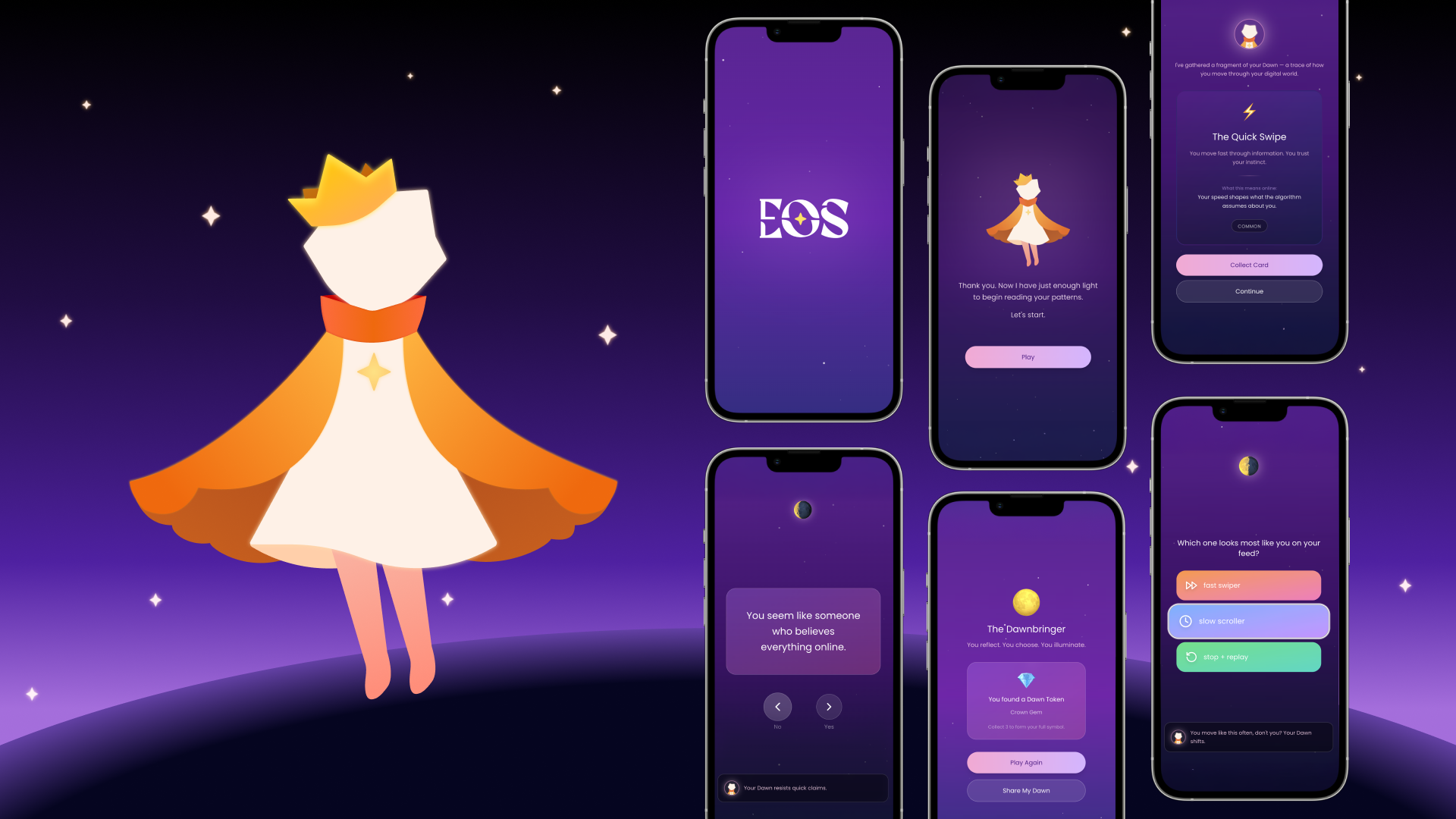
- Client:
- Team:
-
Disciplines:
Game Design, Interaction Design, Experience Design
-
Schoolyear:
2025-2026
Eos is an interactive educational game that invites teenagers to reflect on how algorithms and social media influence their self-image. Instead of diagnosing, instructing, or correcting behavior, Eos creates a playful space for curiosity, skepticism, and self-reflection, turning invisible digital systems into something teenagers can notice and question.
Teenagers today learn about themselves through
feeds, labels, and patterns generated by algorithms.
Mental health content on social media is constant,
repetitive, and often convincing, not because it is
accurate, but because it feels relatable and familiar.
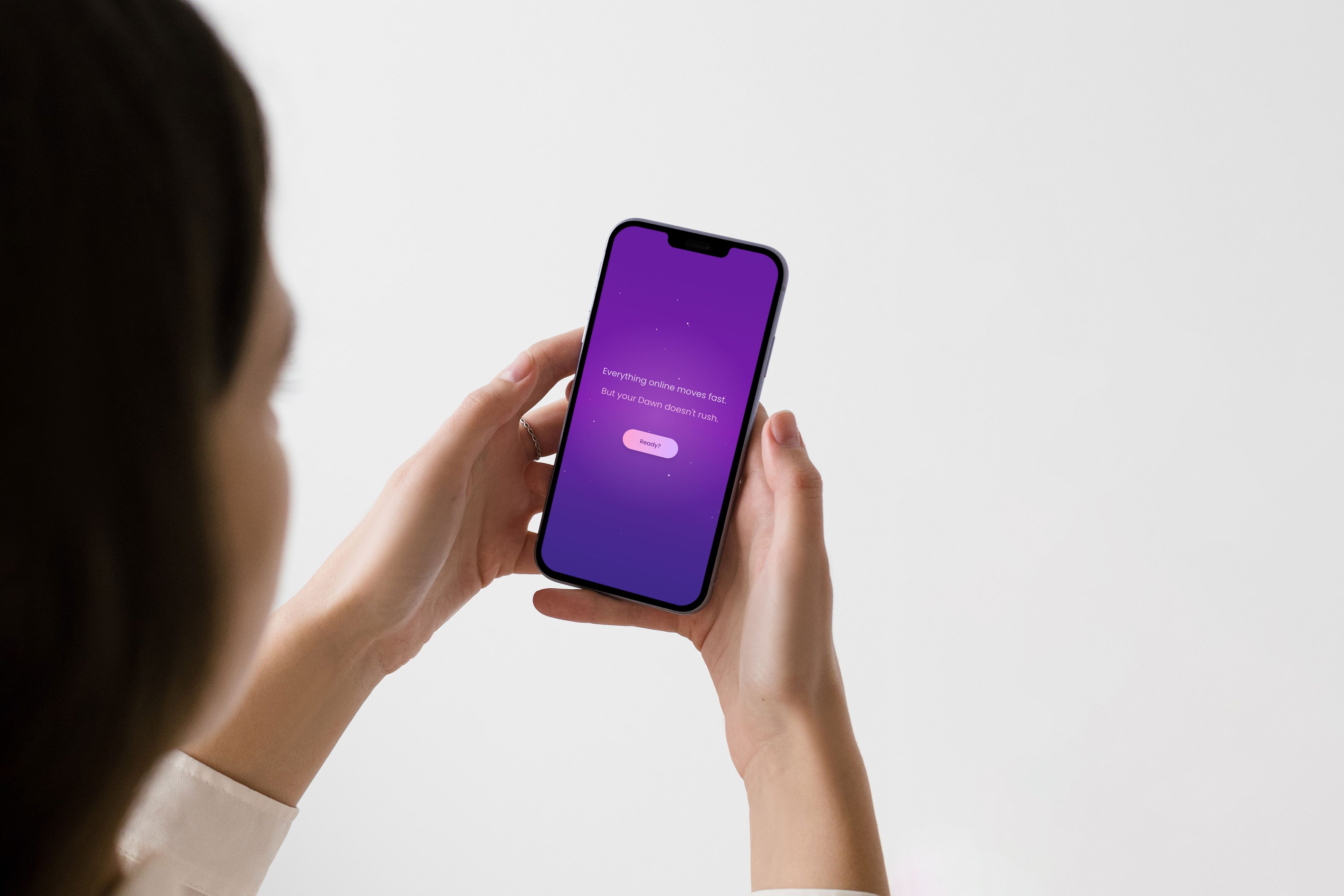
Eos was created in response to this reality. Not to correct it. Not to diagnose. But to slow it down. Eos asks what happens when teenagers are invited to notice how systems interpret them, and how belief forms through repetition rather than truth.
Starting from a Question, Not a Solution
Eos did not begin as a game. It began as a question: how do digital systems shape the way teenagers come to see themselves? Rather than designing an experience that explains algorithms, the goal was to create one that behaves like them. An experience that responds, repeats, and reflects back patterns over time, allowing players to notice how meaning is constructed through interaction.
This intention shaped every design decision that followed. Eos was never meant to diagnose or solve a problem. It was meant to create space for curiosity and doubt, and to let reflection emerge through play.
Listening Before Designing
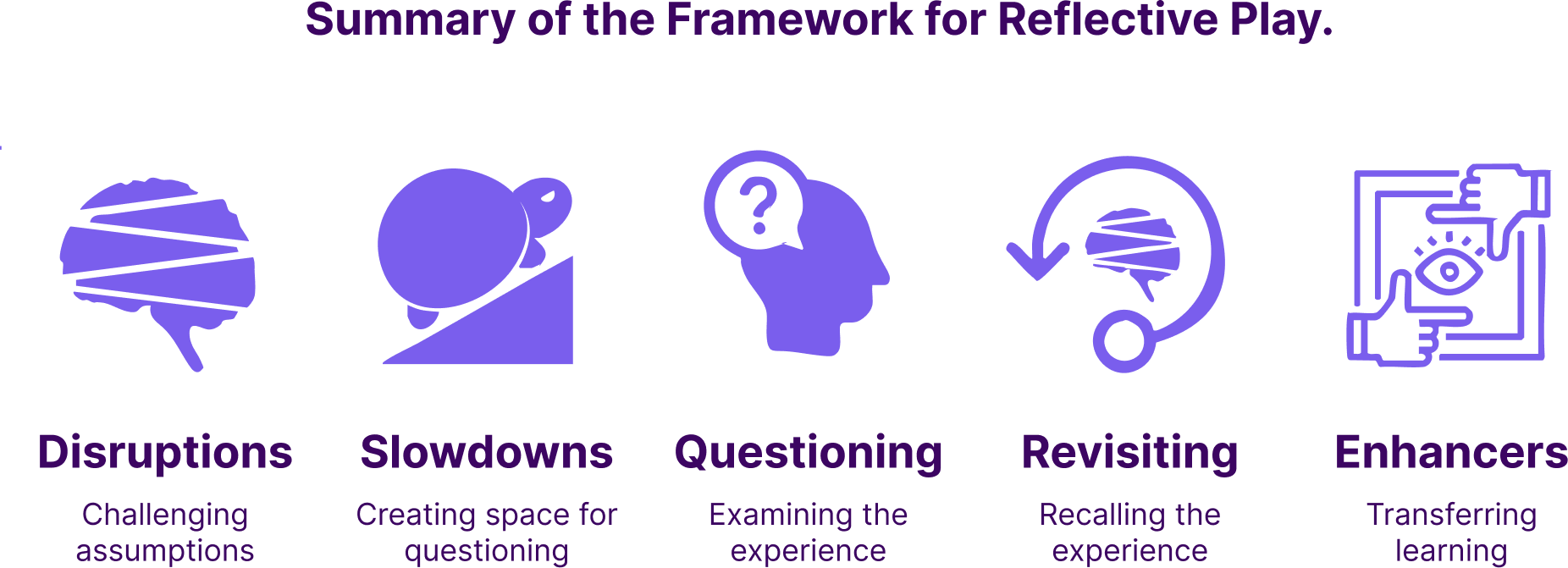
The direction of Eos was grounded in research. Desk research revealed how mental health content spreads online through repetition and relatability rather than accuracy. Interviews with mental health professionals confirmed that self-diagnosis among teenagers is increasingly common, often driven by social media rather than clinical guidance. Workshops with teenagers showed that while many understand how algorithms work, they still internalize the messages these systems produce. Educators added another layer, expressing the need for tools that support discussion rather than assessment.
Across these conversations, a consistent tension emerged: teenagers do not lack of information, but they lack tools that help them slow down and question what they are consuming. This tension became the core of Eos.
Finding the Right Form
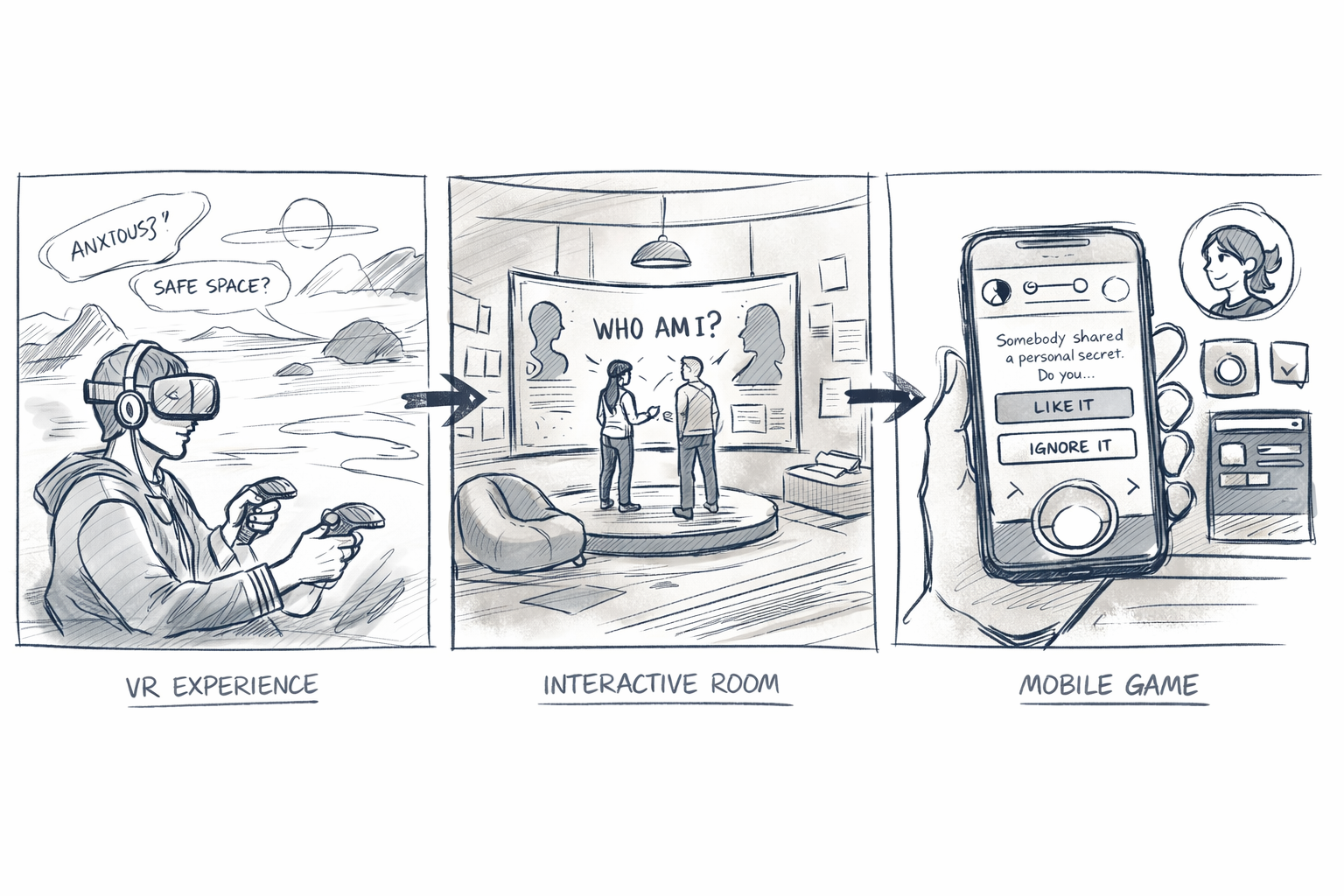
Early in the process, Eos explored multiple formats, including a VR experience and a physical installation. While these concepts offered strong emotional impact, they quickly revealed limitations. VR raised accessibility concerns, and physical spaces lacked scalability and classroom integration. A game-based experience, however, allowed for repetition, pattern- building, and individual pacing. It also aligned with how teenagers already interact with digital systems.
Choosing a game was not about entertainment. It was about familiarity. Games offered a language teenagers already understand, making reflection feel less confrontational and more exploratory.
Learning Through Iteration
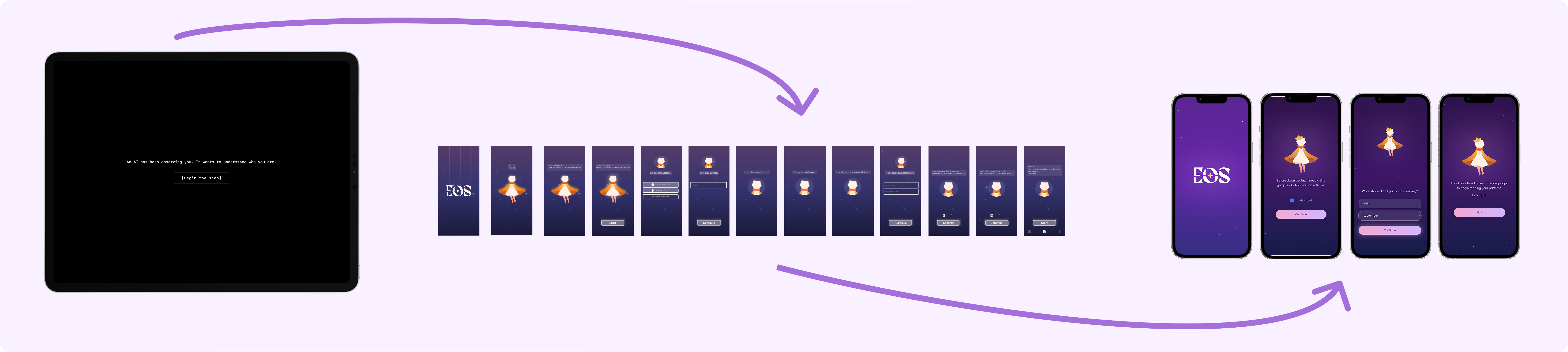
Eos evolved through three main prototypes. The first prototype tested whether the concept itself worked. It sparked curiosity and emotional tension, but some players found it intimidating. The second prototype improved clarity and inclusivity, but leaned too far into instruction, making the experience feel like a questionnaire rather than a game. The third prototype refined this balance, shifting toward behavior- based questions, subtle guidance, and symbolic outcomes.
How the Experience Unfolds
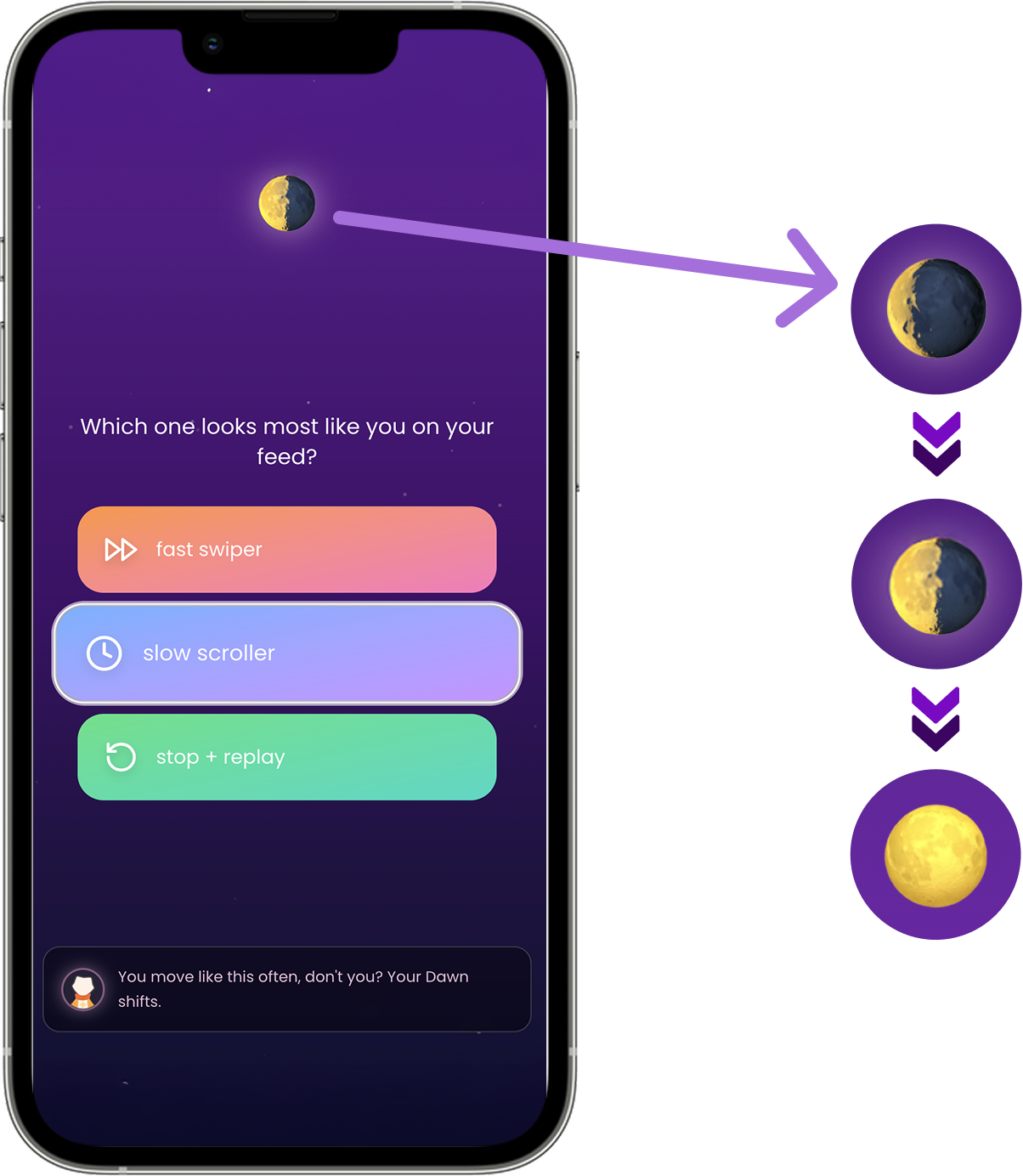
In its current form, Eos invites players to move through short, instinctive interactions. Rather than answering questions about feelings or identity, players respond to situations and choices that mirror everyday digital behaviour. Over time, the system tracks patterns rather than individual answers.
These patterns are visualized through the Dawn Meter, which reflects how skeptical or trusting a player’s behavior appears over the course of the game. There are no correct answers, only tendencies. The experience concludes with a symbolic profile and Dawn token, designed to prompt reflection and conversation rather than define identity.
Eos as a Guide, Not an Authority
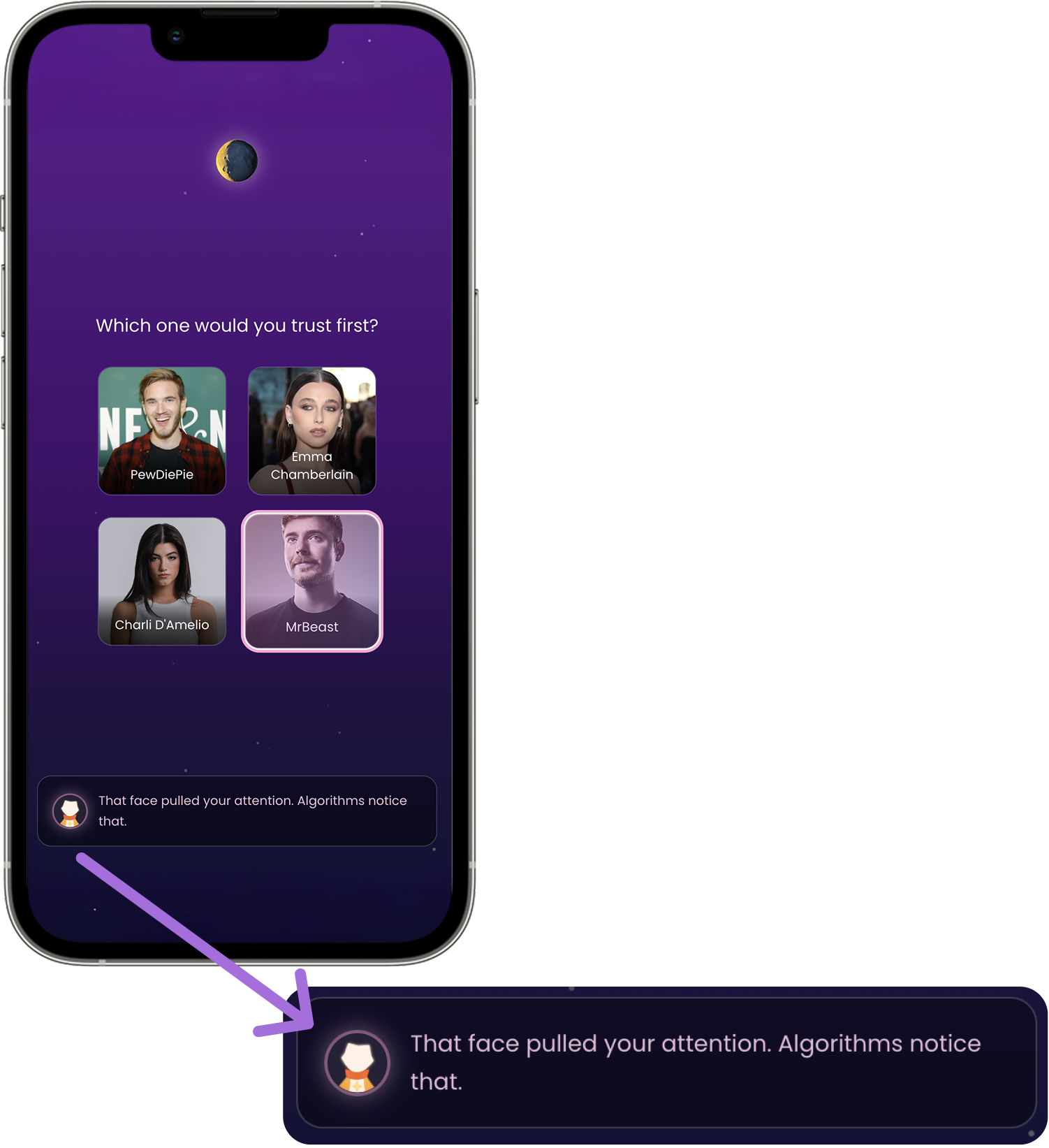
Throughout the experience, Eos appears through subtle pop-ups that explain what is happening without interpreting the player. These moments evolved significantly across prototypes. Early versions were intentionally provocative but felt too confronting. Later versions became overly explanatory. The final version strikes a balance: informative, brief, and non-judgmental.
Eos does not comfort, diagnose, or reassure. It mirrors system logic and then steps back, leaving meaning- making to the player.
A Role in Education
While Eos can be played individually, it was designed with classrooms in mind. Educators saw potential in Eos as a digital literacy tool that supports discussion rather than testing. By externalizing algorithmic logic into a shared experience, Eos helps bridge students’ digital lives and classroom conversations.

Watch the trailer
What Eos Leaves Behind
Eos does not aim to solve mental health, nor does it offer answers. Its value lies in creating moments of pause, skepticism, and self-trust. If Eos were to scale, its success would raise a deeper question: why did teenagers need a speculative design game to reflect on their mental health in the first place?
Eos exists within that tension. Not as a solution, but as an invitation to question the systems that quietly shape how we come to understand ourselves.