DPP Aura
Turning Digital Product Passport data into consumer understanding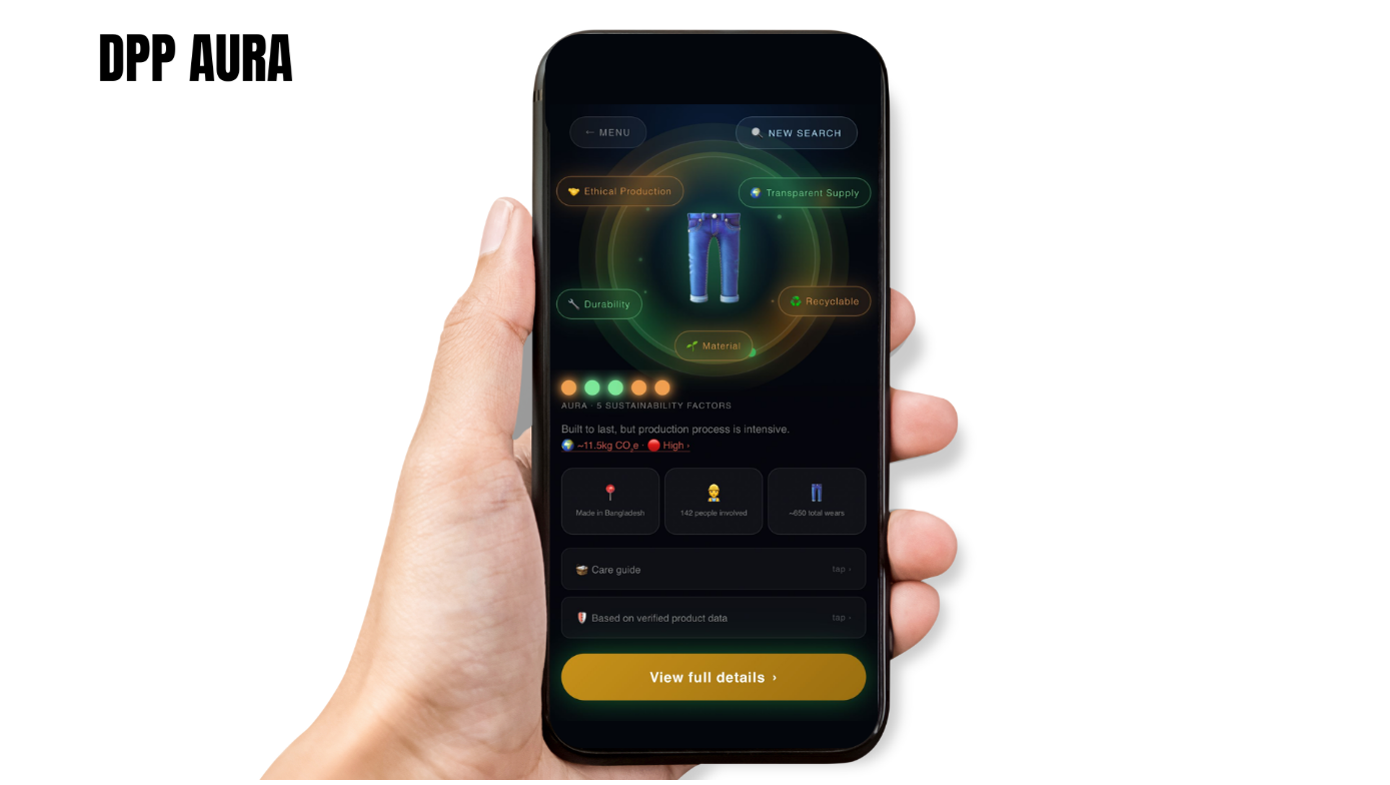
- Client:
- Team:
- Disciplines:
-
Schoolyear:
2025-2026
The Digital Product Passport (DPP) provides consumers with increasing amounts of product information, but transparency alone does not create understanding. This project explores how complex DPP data can be translated into an intuitive consumer experience, making sustainability information easier to understand during the shopping journey.
The Digital Product Passport (DPP) is expected to transform transparency within the fashion industry by making product information more accessible than ever before. However, making data available does not automatically mean that consumers understand it. Shopping decisions are often made within seconds, while DPPs contain complex information about materials, production, durability and traceability. This project explores how complex DPP data can be translated into meaningful consumer understanding, investigating how sustainability information can become accessible and relevant at the point of purchase.
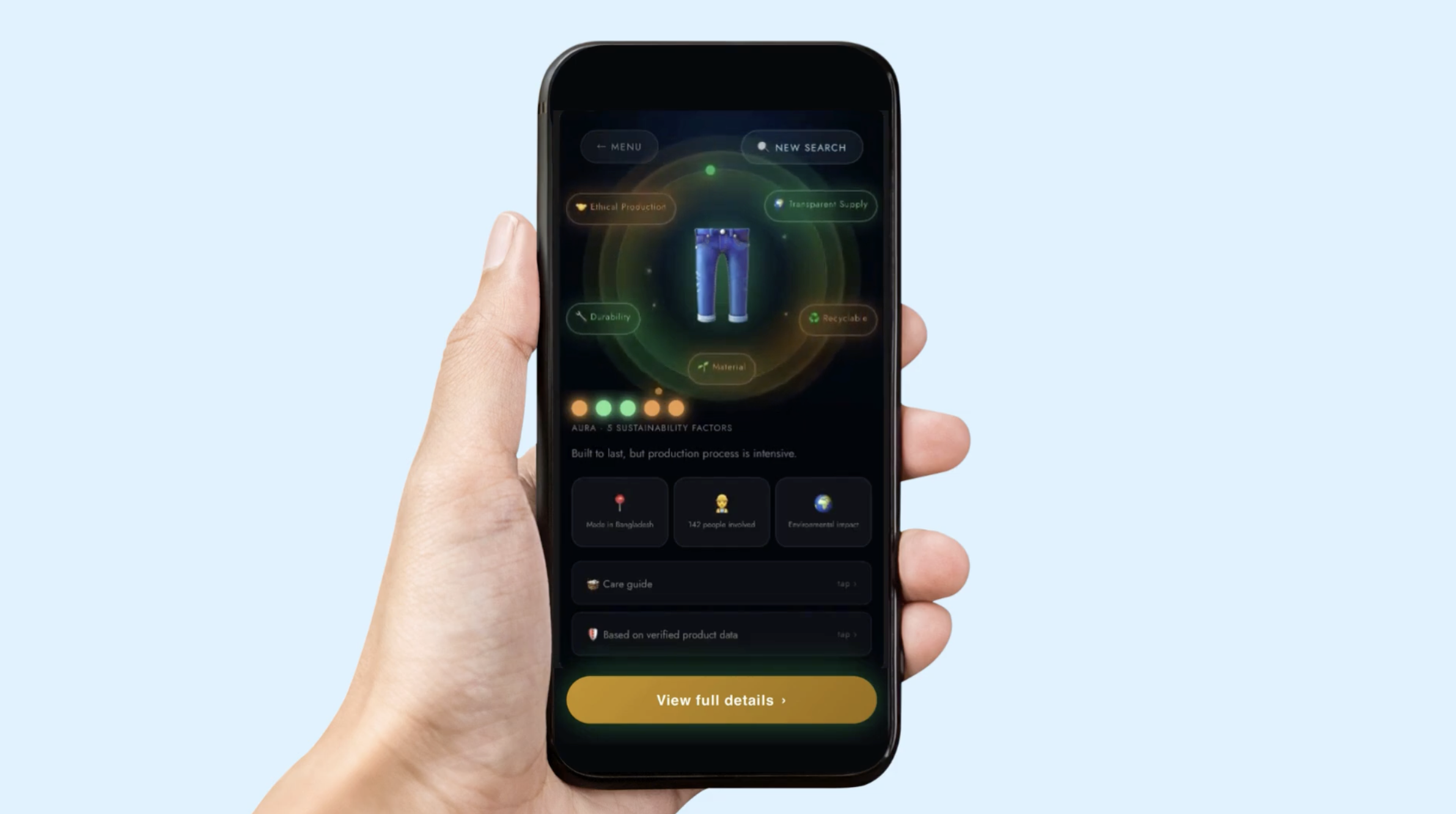
Rather than redesigning the Digital Product Passport itself, this project focuses on the communication layer between DPP data and consumers. The outcome is the DPP Aura: a visual interface that translates complex product information into a quick overview while allowing consumers to explore additional information when desired.
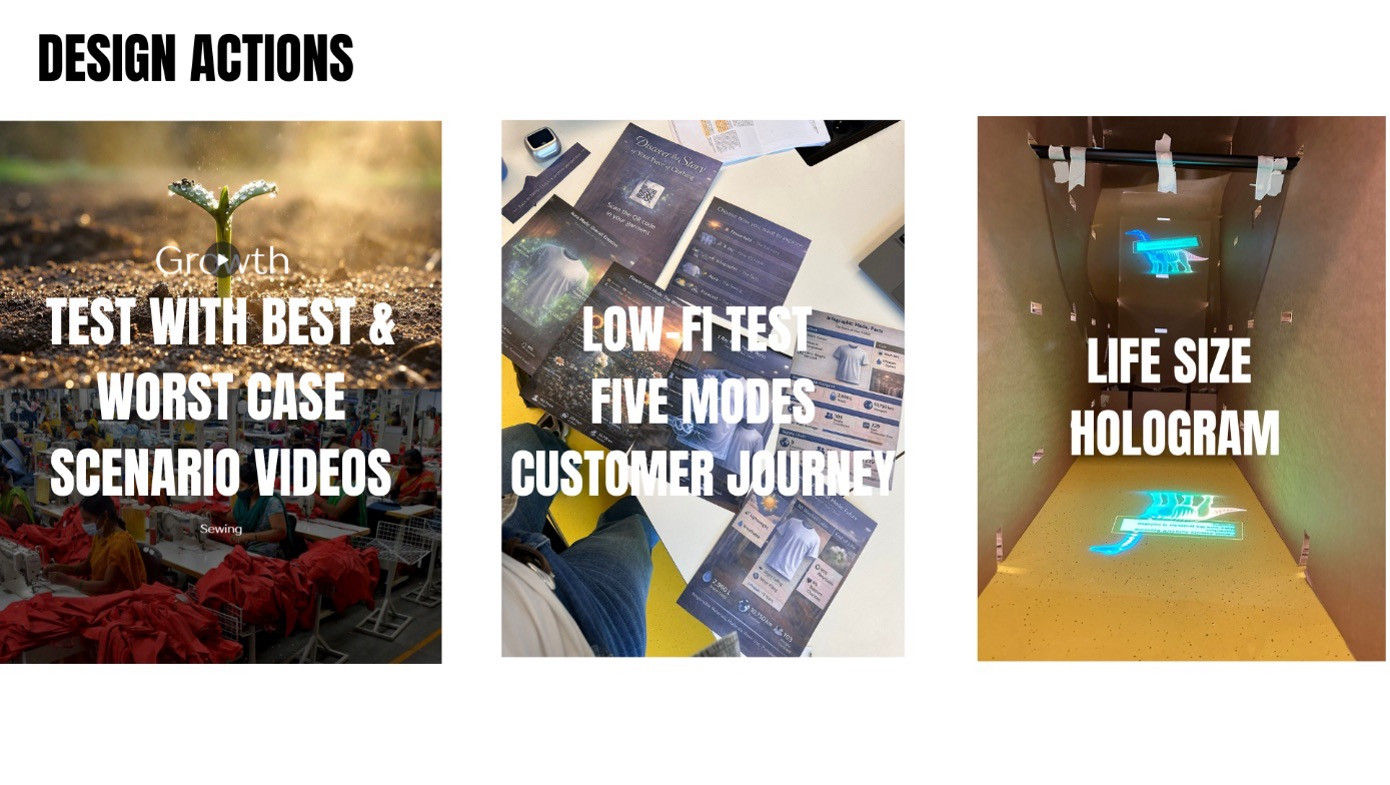
The project followed a Research through Design approach, exploring multiple concepts before arriving at the final solution. Early iterations focused on technology-driven experiences such as smart mirrors and holograms. These concepts explored how emerging technologies could make the Digital Product Passport more engaging. Through prototyping, consumer testing and expert interviews, an important insight emerged. The challenge was not making the technology more innovative, but making the information more understandable.
This insight shifted the project from technology towards communication. Instead of asking how technology could attract consumers' attention, the project began exploring how complex sustainability information could support understanding within the consumer decision-making process.
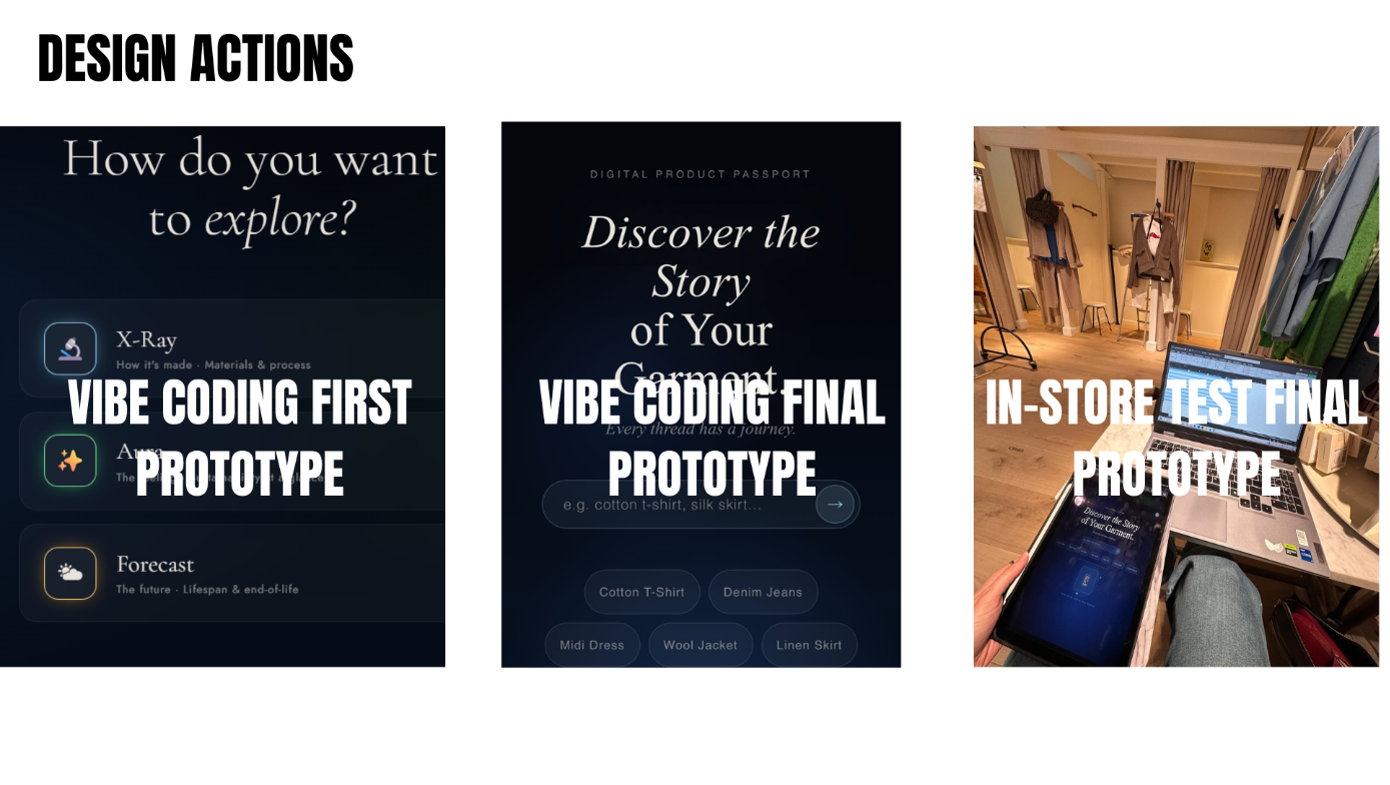
The final concept, the Aura, presents consumers with a quick visual impression supported by optional layers of information. Rather than reducing sustainability to a single score, it creates a moment of reflection while allowing consumers to decide how deeply they want to explore the available data.
Throughout the design process, new challenges emerged. The current Digital Product Passport framework is still evolving, meaning many mandatory data fields, calculation methods and reporting standards have yet to be defined. This raised questions beyond interface design. Who determines when information should be presented as green, orange or red? How should estimated indicators be calculated? Who validates sustainability claims and ensures that translated information remains reliable?
Instead of treating these questions as obstacles, they became opportunities for further exploration. The project proposes that future translation layers between DPP data and consumer interfaces may require collaboration between regulators, brands and independent verification organisations to ensure consistency, transparency and trust.
Ultimately, the DPP Aura demonstrates that the value of the Digital Product Passport may not lie solely in providing more information, but in making that information understandable within the limited time and attention consumers have while shopping.
The DPP Aura should be seen as a starting point rather than a final solution. As Digital Product Passports continue to develop, future work could validate translation frameworks, governance structures and consumer interpretation of sustainability information. The project also explores how DPPs could evolve beyond compliance into future consumer services, such as lifecycle companions and personal sustainability coaches, creating new opportunities for consumer engagement throughout the lifetime of a garment.