Phygital Fashion Shows
Combining Physical Craft with digital Storytelling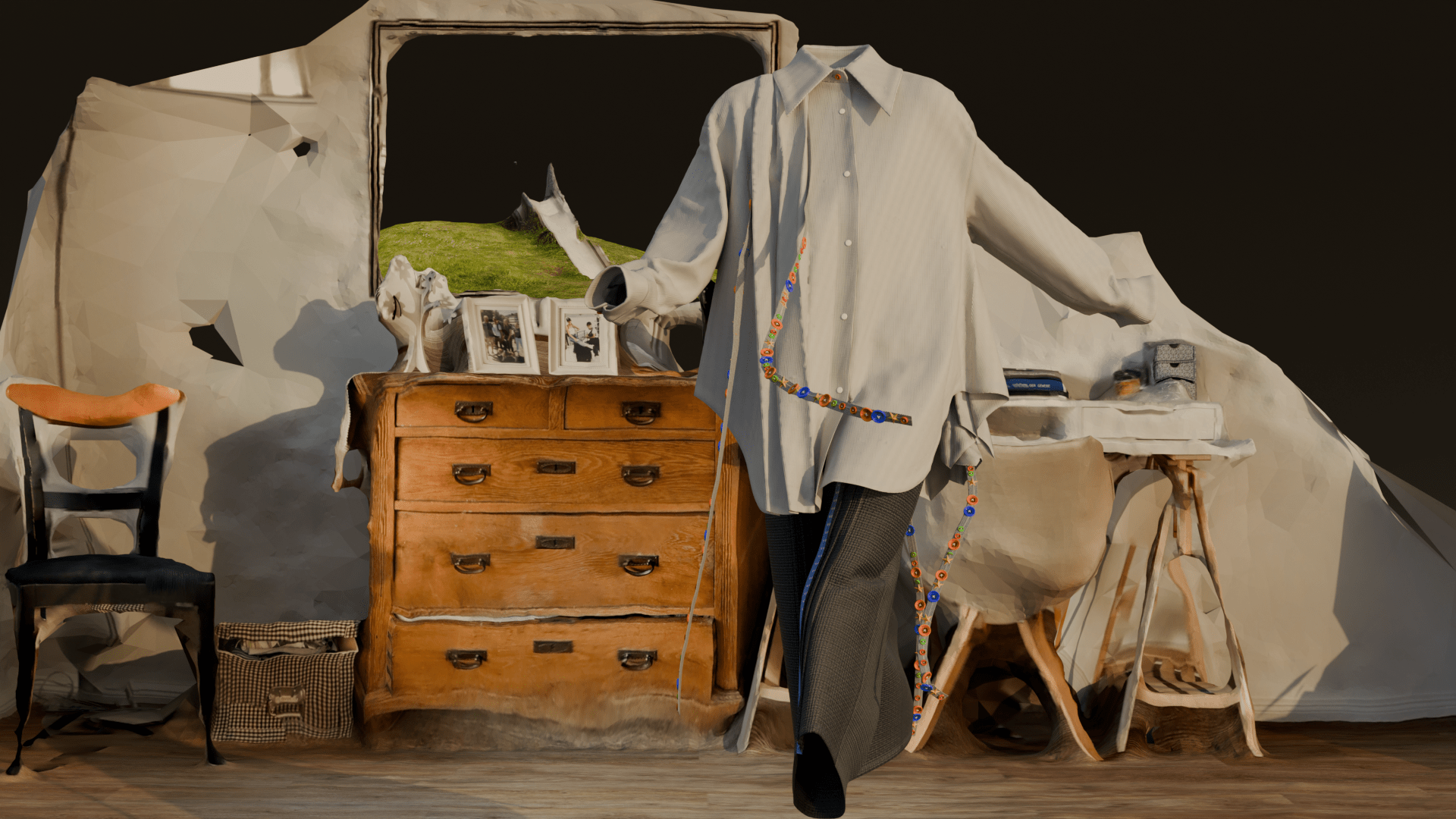
- Client:
- Team:
-
Disciplines:
Storytelling, Experience Design, 3D
-
Schoolyear:
2025-2026
Fashion shows reveal inherent contradictions: While physical shows are often highly exclusive, limited to editors, buyers, and celebrities, they are simultaneously accessible to global audiences through livestreams and social media. Preparing a show takes months of intense work and large teams, while the actual presentation often lasts only around ten minutes. There was a shift from highlighting craftsmanship towards spectacle and performance. Is the value of the experience proportional to what goes into it?
Fashion shows have continuously evolved from physical runway presentations to livestreams and fully digital experiences. While traditional shows create emotional connection and showcase craftsmanship, digital formats oHer accessibility and creative freedom. However, meaningful hybrid presentations that combine physical and digital fashion within one experience remain rare.
The project investigates how digital and physical garments can interact within the same presentation and how this could redefine the way audiences experience fashion shows. The projected is guided by the following questions:
-
How can physical and digital fashion be combined within one show format and what possibilities emerge from this approach?
-
What advantages and limitations do hybrid fashion shows have compared to traditional and fully digital presentations?
The Study
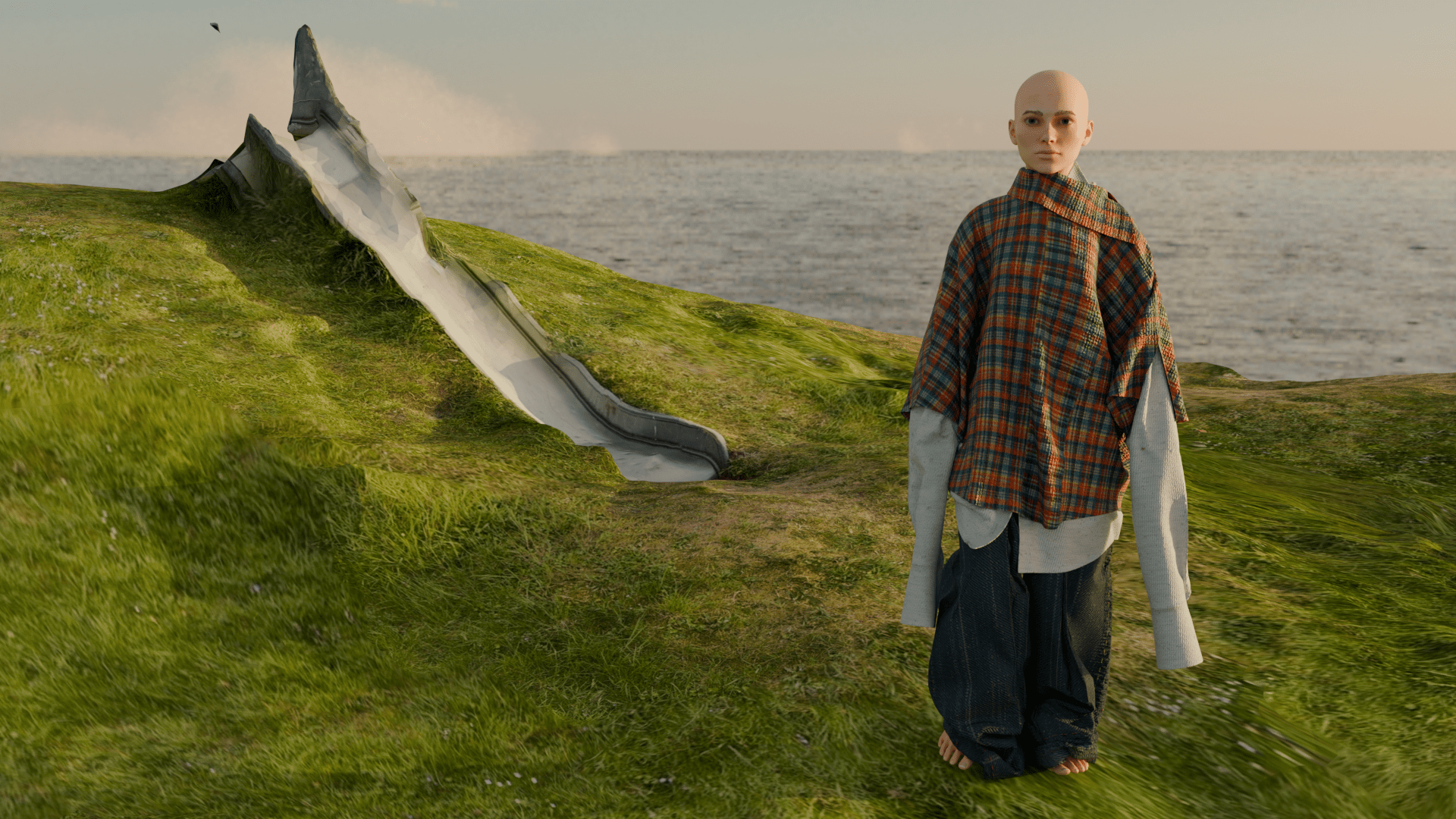
This research builds on a previous Fashion Design project inspired by childhood, nostalgia, and the playfulness and carelessness we often lose while growing up. This project is an experiment to further develop the collection through a phygital approach and explore whether the design process, technologies used, final outcome, and audience reaction differ from a more traditional fashion presentation approach.
The following methods were used:
-
Interview with and industry professional
-
Physical and digital experimentations
-
Peer testing and feedback
Initial Idea
My initial goal was to create a hybrid fashion presentation by bringing the digital into the physical through holograms that could be shown during a live event.
Building on the concept explained above, I started by developing sketches from which I later physically produced 2 outfits. To do so, I manually drafted the patterns, cut the fabrics and sewed the pieces together. After finishing the physical garments, I continued by creating their digital twins, as well as additional outfits in Clo3D and Blender to finish the collection. In the end, I created two physical and five digital outfits.
Key insights from these actions are that the digital and physical workflow differ significantly from each other. While physical production requires careful planning, precision and attention to detail, digital workflows allow much more room for experimentation and visual adjustments. This led me to the hypothesis that digital patterns do not need to be technically accurate unless intended for physical production.
Once the physical and digital garments were finished, I started experimenting with holograms, more specifically the Pepper’s Ghost effect, which reflects a 3D render onto a transparent screen, placed at a 45° angle.
Bringing in the physical into the digital
Overall, the experiment showed that the illusion works and creates a memorable effect. However, achieving a seamless life-sized result would require a much more advanced setup. While I can imagine this effect working especially well in theatrical performances, I believe transparent holographic screens, could work better for fashion presentations. Most importantly, this experiment made me rethink my hybrid approach. Instead of bringing the digital into the physical, I started asking myself: What would happen if I brought the physical into the digital?
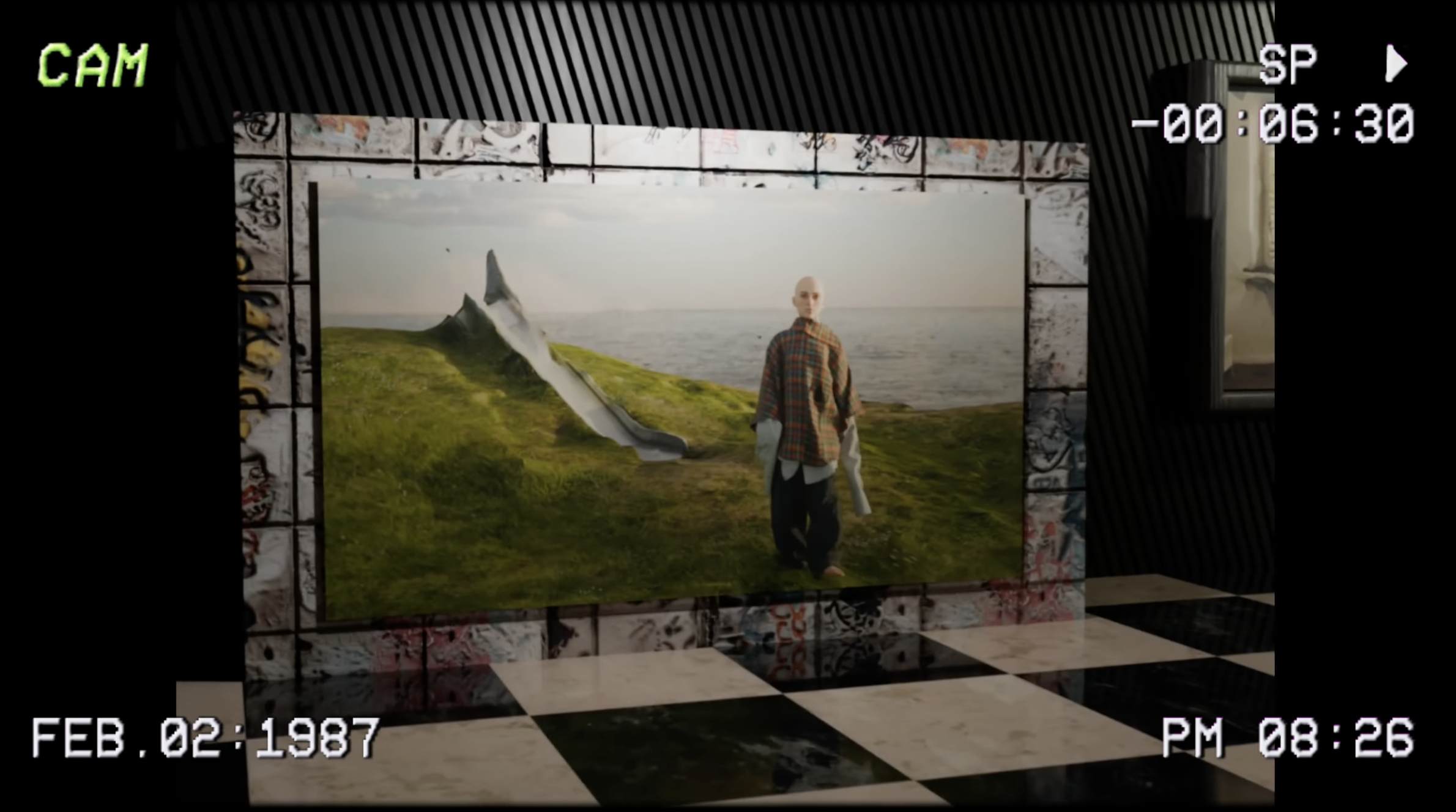
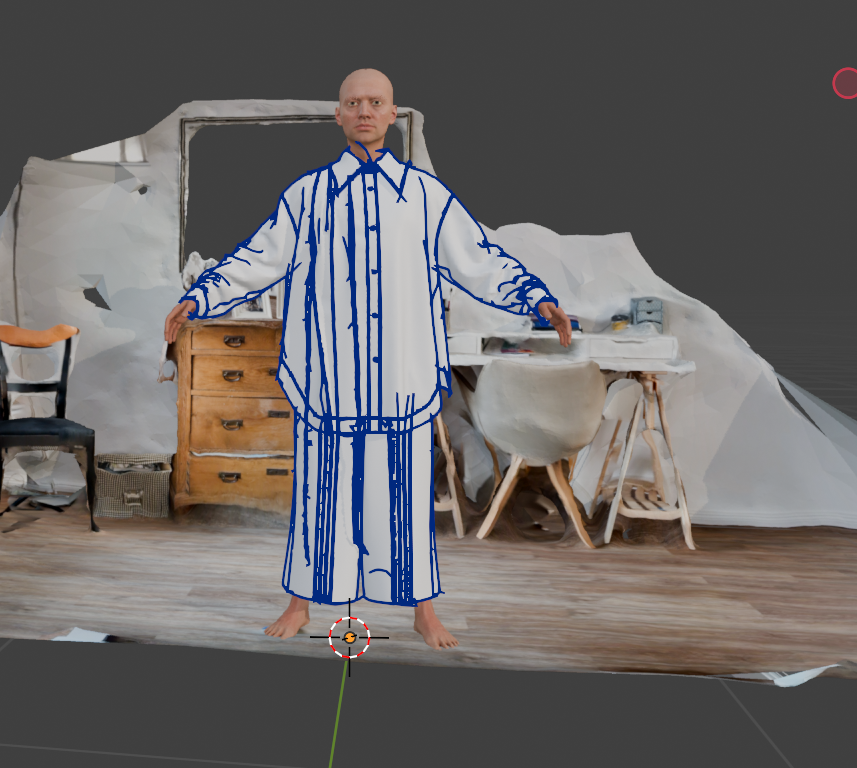
The final prototype combines physical garments with a digital presentation. Instead of
showing looks on a runway for only a few minutes, the goal was to create a slower, more
immersive, and intentional way of experiencing fashion. Visitors can examine physical
garments up close on mannequins while also seeing the outfits come to life digitally. An
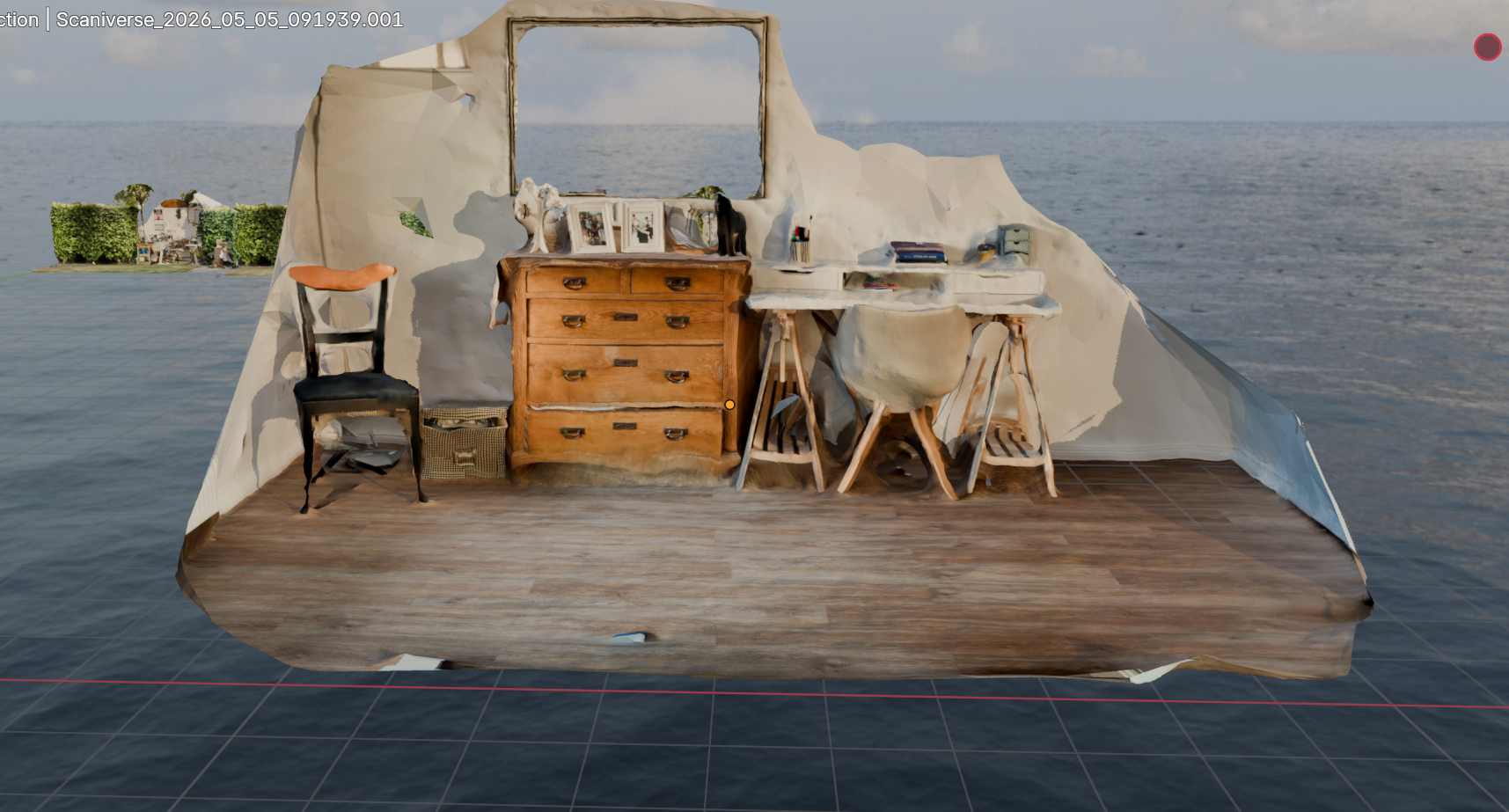
important part of the prototype is the use 3D scans as environment in which the outfits
can exist, adding another layer of hybridity by representing the “real” within the digital
space. The video follows a POV perspective of someone walking through a fashion exhibition and encountering diHerent animations displayed like artworks. Some scenes
show moments from everyday life, while others go beyond physical reality.
Reflection
This project should be seen as one possible alternative to the traditional fashion show rather than a replacement. I can especially imagine this approach being valuable for emerging designers or collaborative exhibitions, where physical craftsmanship and digital storytelling can exist alongside each other. Future iterations could explore different technologies or larger exhibition formats. The main finding of this project is that physical and digital fashion do not need to compete. Instead, digital storytelling can support craftsmanship by communicating concepts that are difficult to express physically, creating slower, more immersive fashion presentations that give audiences more time to engage with both the garment and the story behind it.