Jime Microtransit
Reimagining the night commute for Amsterdam's hospitality workers
- Client:
- Team:
- Disciplines:
-
Schoolyear:
2025-2026
Amsterdam's hospitality staff face a mobility crisis after midnight. Public transport runs infrequently and feels unsafe. Private ride-sharing options are fast but cost hours of minimum wage work. Cycling after a long shift is physically exhausting. These essential night workers are systematically excluded from the transport infrastructure that serves day commuters.
Between midnight and 6:00 AM, the public transport system of Amsterdam shuts down. This leaves night shift hospitality workers with an impossible compromise between safety, speed, and cost. They often wait up to an hour for expensive night buses that feel unsafe. Alternatively, they spend significant portions of their wages on private rides. This lack of infrastructure causes financial strain and compromises physical safety, especially for women. Jime challenges us to rethink platform work and mobility as a public service for this underserved community.
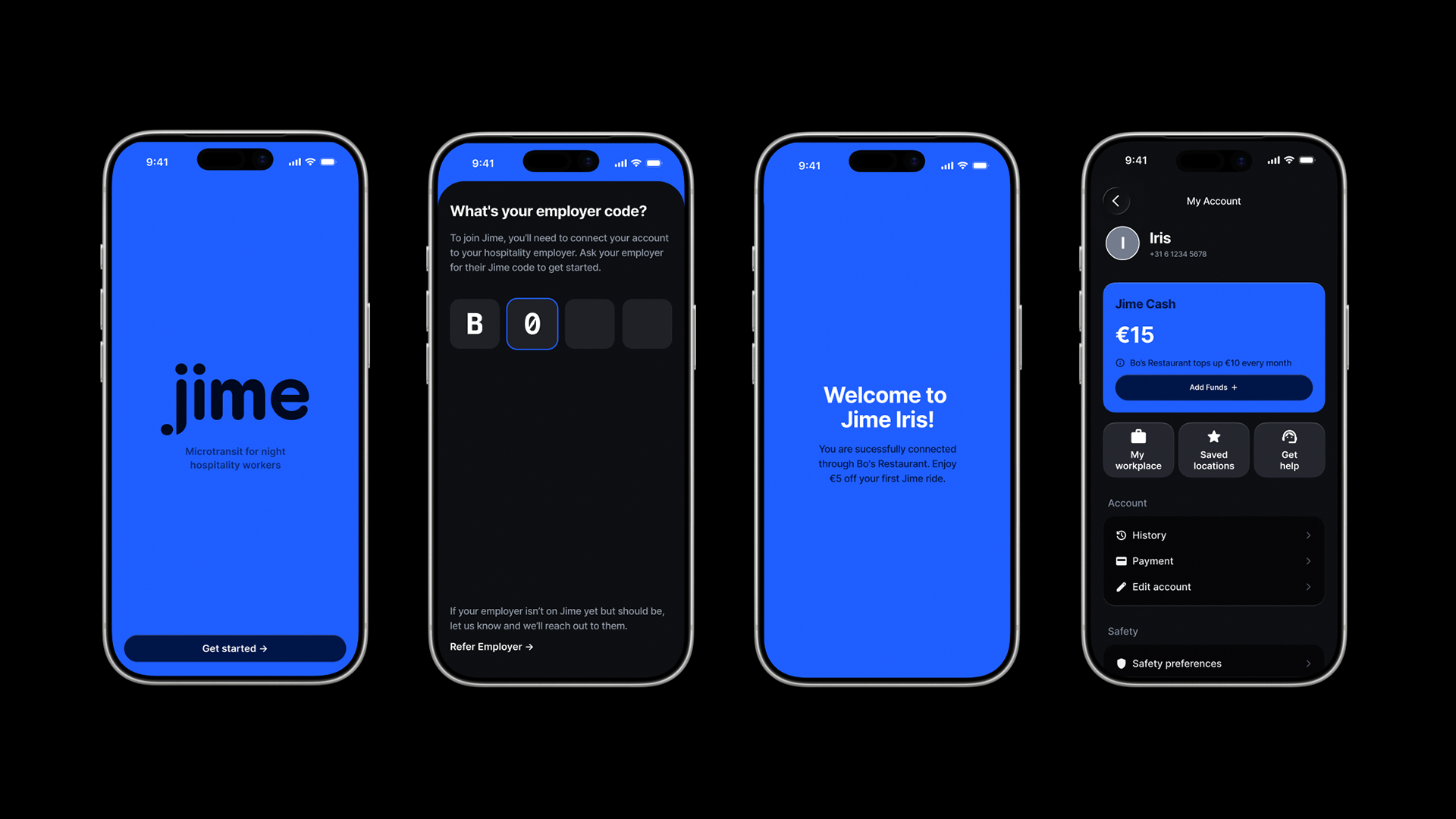
Jime is a flexible microtransit service designed specifically for verified hospitality workers. It bridges the gap between inadequate public transport and expensive private rides. Workers access the service through an app and book rides that group colleagues heading in the same direction. This shared routing model splits the costs and keeps the service affordable.
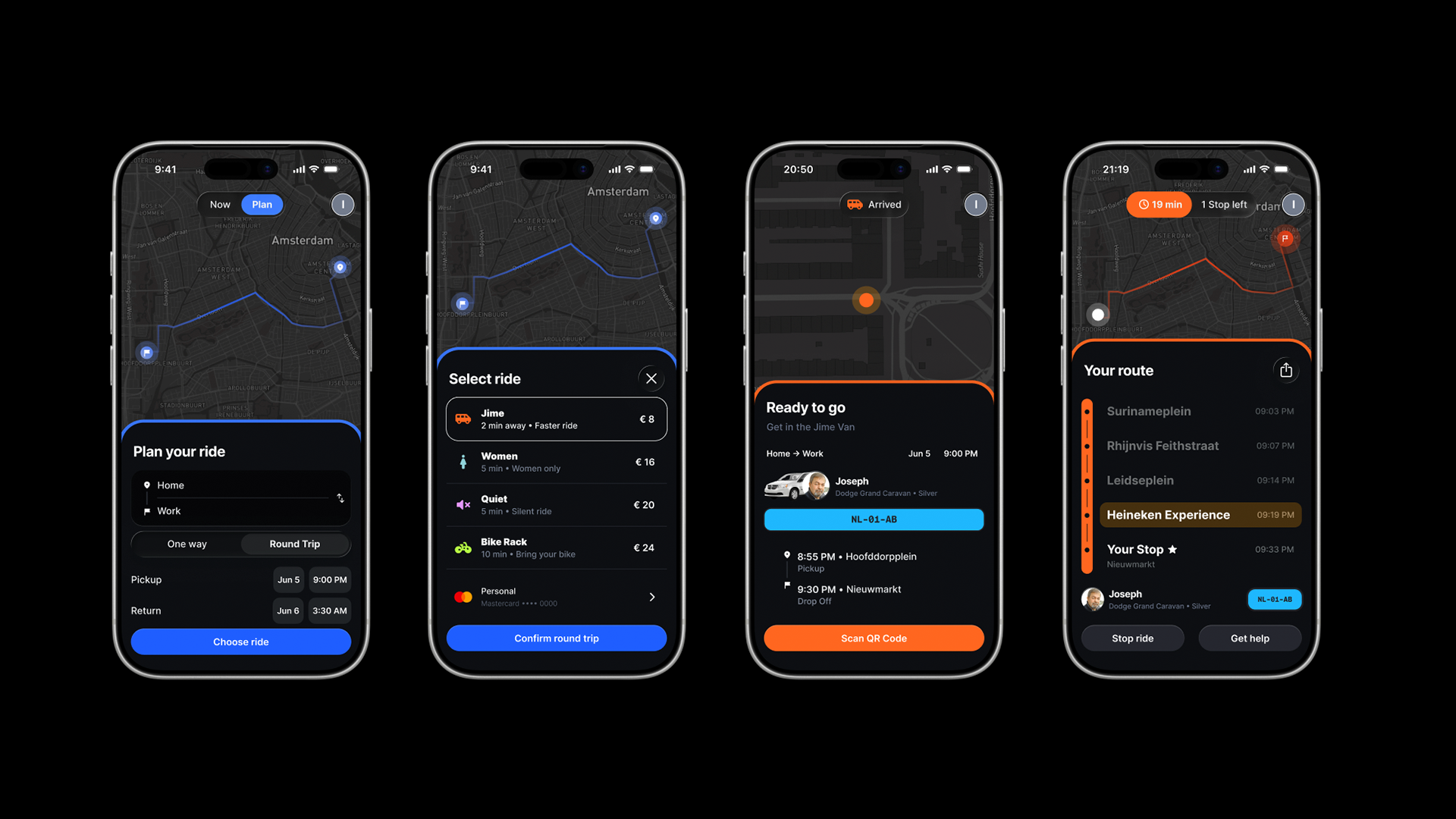
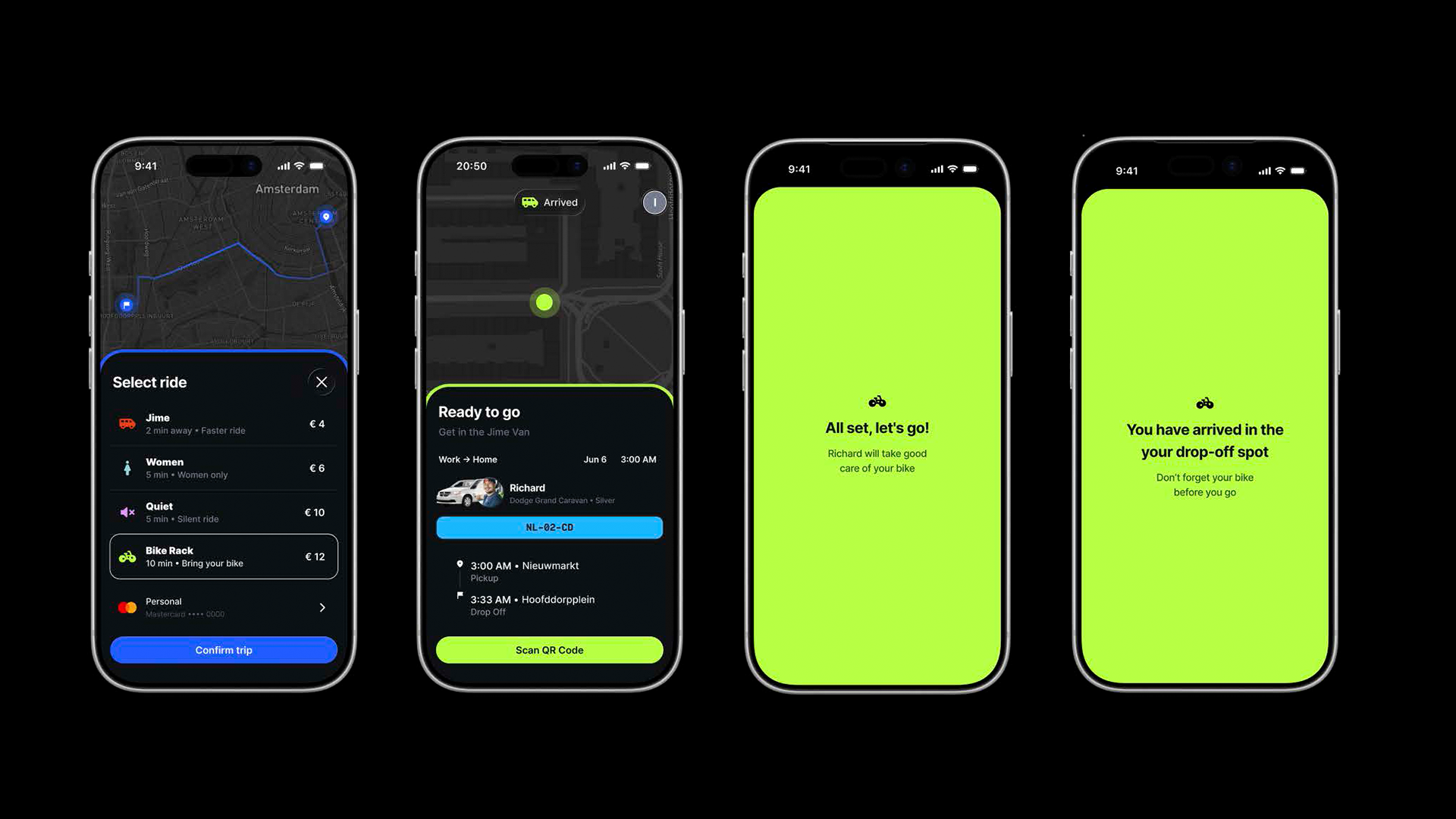
The system operates through strategic pickup and dropoff zones instead of a door-to-door service. This ensures high efficiency and minimizes detours. It also keeps exact home addresses private, drastically reducing the risk of stalking or harassment. We incorporate specialized ride options to address specific user needs. Workers select a Standard van, a Women-Only van for gendered safety concerns, a Quiet van to decompress, or a Bike van equipped with racks.
Employers form a vital part of the Jime ecosystem. They verify their employees to create a trusted rider network. Venues optionally subsidize travel costs as a business expense to improve staff retention during a major labor shortage. Drivers benefit from transporting predictable, verified passengers instead of unpredictable nightlife crowds. We use Via Transportation to power our dynamic routing. Via is a white-label software provider that allows designers to build custom services on its platform. This allows us to leverage proven algorithmic efficiency without building complex software ourselves.
We encountered several significant difficulties during the design process. Initially, we created a peer-to-peer app concept to connect workers walking the same route. We quickly realize this exposes sensitive location data and actively encourages stalking. We pivot entirely to a managed microtransit service to prioritize physical safety.
Pricing presents another major ethical dilemma. We must balance fair compensation for drivers against keeping the service affordable for vulnerable riders. Relying entirely on surge pricing extracts maximum profit from users precisely when they need help the most. However, eliminating surge pricing removes the financial incentive for drivers to work unsociable hours. We navigate this friction by implementing a capped surge pricing model for the initial pragmatic launch phase. This guarantees drivers are on the road without enabling predatory pricing.
Jime aims to prove that mobility is a public service rather than an individual transaction. The next step involves testing the economic viability with business experts and securing long-term employer partnerships. If successful in Amsterdam, the service can scale to other off-hour industries like healthcare. The model can also expand to other European cities with vibrant night economies but limited public transit.